Untold story
How Walt Disney creatives drew inspiration from art destined for Europe’s elite and delivered it to a more mainstream audience
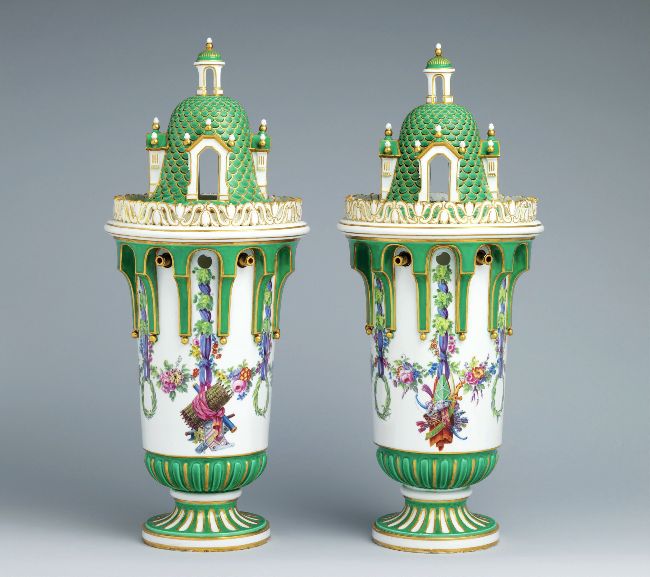
Pair of tower vases – Sèvres Manufactory, c. 1762.
PHOTOS: (THIS PAGE) THE METROPOLITAN MUSEUM OF ART, NEW YORK.
Once upon a time there was a man called Walt Disney whose job it was to bring joy to young and old forever and ever. He did this by creating a world of fantasy, by filling the human heart and mind with dreams, by building temples to escapism and by bringing into being Mickey Mouse, one of the most recognisable figures of the past century, who, some say, taught millions of children about love, loss, tolerance and loyalty.
More than 50 years after Walt Disney’s death, his cartoons – among them Snow White and the Seven Dwarfs, Pinocchio, Fantasia, Bambi, Cinderella, Alice in Wonderland, Sleeping Beauty, Lady and The Tramp and One Hundred and One Dalmatians – remain essential viewing for new generations throughout the world, and his studio and theme parks a thriving concern. The End.
The End? No. Never. In fact, a new exhibition – Inspiring Walt Disney: The Animation of French Decorative Arts – which opened first at the Metropolitan Museum in New York, and is now at the Wallace Collection in London, explores an as-yet little considered aspect of Disney and his studio’s work, and that is the debt it owes to European art and architecture, and specifically to French decorative arts from the 18th century.
Shared theatrical vocabulary
Surprising as it may seem, and despite the differences that separate them – not least a 200-year age gap and the fact that the interior items were destined for Europe’s wealthiest consumers while Disney’s films wanted to embrace all cultures, ages and nations – the two art forms share a common theatrical vocabulary that transcends the centuries and class, with the over-the-top flamboyance of the first fuelling the vivacious creations of the second.