BATHROOM DESIGN TIPS
Learn how to get your layout and finishes right for this crucial room in the home
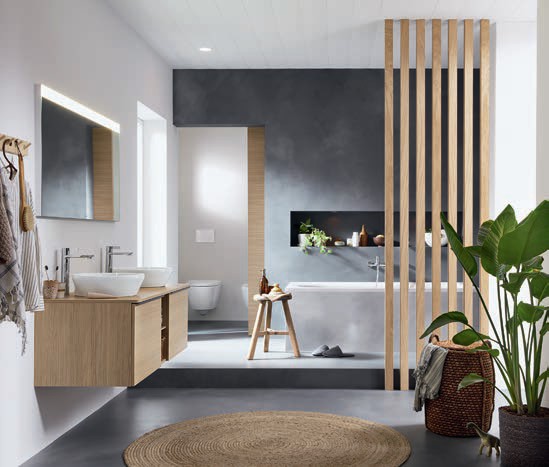
Duravit’s Neo range features heavily across this bathroom, with basins on a floating counter and a secluded toilet. The large bathroom has been zoned with timber elements to denote private and social spaces
Designing your bathroom from scratch is the perfect opportunity to create an oasis of calm and relaxation. The trend towards achieving hotel and spa levels of opulence is increasing, and many self builders are allocating bigger budgets for this room as a result. It’s likely you’ll be planning at least one WC downstairs, a further family bathroom and at least one ensuite. Each of these will have a different balance of aesthetics and practicality, so it’s important to allocate enough space for comfortable use.
Space planning
Ideally you want to plan your layouts in as much detail as possible early doors. This will avoid any delays when your project starts on site, as your trades will know where to lay the ducts for drainage, pipes and ductwork, etc.
Start by deciding on what fittings you need in each room. For example, a cloakroom downstairs might only have a toilet and basin, or it could be a fullyequipped wetroom complete with a shower. Likewise, you might want a wow-factor freestanding tub in your master suite, but a combo bath/ shower in the main family bathroom. “Make a scale plan and include elements that will affect your design, such as window positions and heights, external walls – and therefore drainage – and door openings,” says Lee Reed at Easy Bathrooms. One good space-saving tip would be to use pocket doors that slide into a cavity in the wall, so that you’re not losing precious floor space to hinged openings. “While the room size will dictate what is feasible, door and window positions will also impact what can be achieved. For a separate shower and bath, plus toilet and basin, for example, you need a bathroom of at least 1.7m x 3m,” says Lee.