PLANNING YOUR SMART HOME
Find out how to design a fully-integrated, whole-house system and why it’s important to plan the infrastructure as early as possible
ORIGINAL WORDS REBECCA FOSTER & GEORGINA CROTHERS
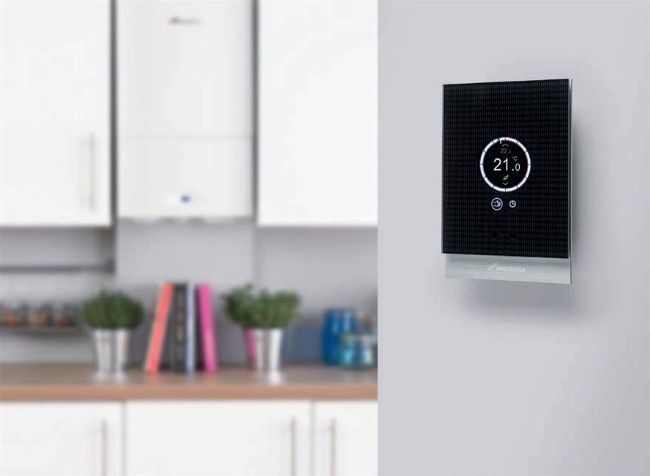
The Worcester Wave (www.
worcester-bosch.co.uk) thermostat allows you to programme and control your central heating and hot water over Wi-Fi via the Wave app on your phone. Schedule the time you want your hot water to come on and choose the temperatures you want your central heating to reach at different times of the day and days of the week
Adecade ago, you might have dismissed the concept of a smart home with fully integrated heating, lighting, security and audio visual as a fad. However, rapid technological advances over that period now mean that well-designed, seamlessly integrated whole-house automation has the potential to transform the way you interact with your property. Plus, with more people working from home than ever before, and soaring energy costs, the right smart solutions have the capacity to create a better day-to-day living experience where you’re spending less money on bills.
Smart tech can broadly be divided into two categories – DIY smart home products purchased off-the-shelf and set up by the end user, and integrated systems (usually hard-wired) that require professional installation. Here’s what you need to know when planning your smart home.