UNDERFLOOR HEATING & RADIATORS
Discover how these different heating options compare and what you need to consider when specifying them for your self build project
ORIGINAL WORDS REBECCA FOSTER & ANNA-MARIE DESOUZA
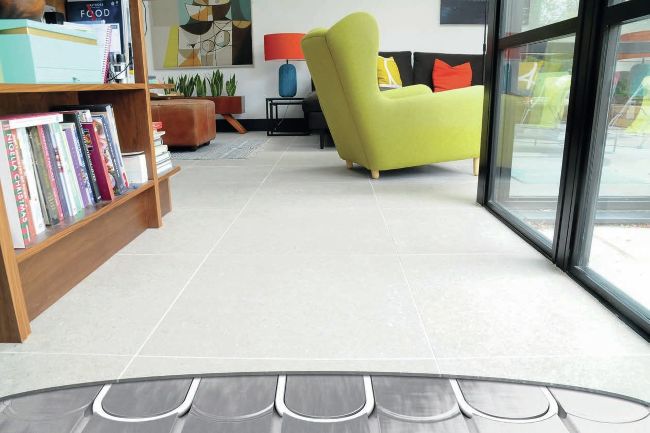
Rapid Response UFH from Wunda Group (www.
wundagroup.com) uses pipes fixed in special low-profile panels (16mm or 20mm), enabling rooms to reach the desired temperature in up to 40 minutes
If the prospect of padding around a snug home barefoot sounds good, it’s likely that underfloor heating (UFH) is already pretty high on the wish list for your self build. When specified correctly and fitted in a well-insulated property, UFH is one of the most efficient ways to evenly heat a building – especially when paired with a low-carbon central heating system, such as a heat pump.
“Underfloor heating works on the principle that heating a space from the ground up will provide better warmth in a room compared to other systems, such as conventional radiators,” says Steven Rooney, director at Cli-Mate. Radiators work by heating the air around them, which can lead to hot and cold spots in some areas, while UFH transforms your entire floor into a heat emitter, with an even spread of warmth distributed across its surface. This works well from an efficiency perspective, as the large surface area of the floor means the system can operate at a lower temperature than a radiator setup. “It also allows for freedom of design. With no radiators stealing space, it leaves more room to live,” says Steven. Underfloor heating also minimises the movement of dust throughout your living space, making it a smart choice for occupants who suffer from allergies. “Radiators circulate air around a room, which moves dust that we breathe in,” says Tom Edmunds, general manager at Wunda Group. “This is why UFH is recommended for homes with asthma and allergy sufferers.”