ROOFING & FLOOR STRUCTURES
A roof over your head and floor beneath your feet are essentials for your home, so you want to get the design details right. Here’s what you need to know
ORIGINAL WORDS JULIAN OWEN & SANDER TEL
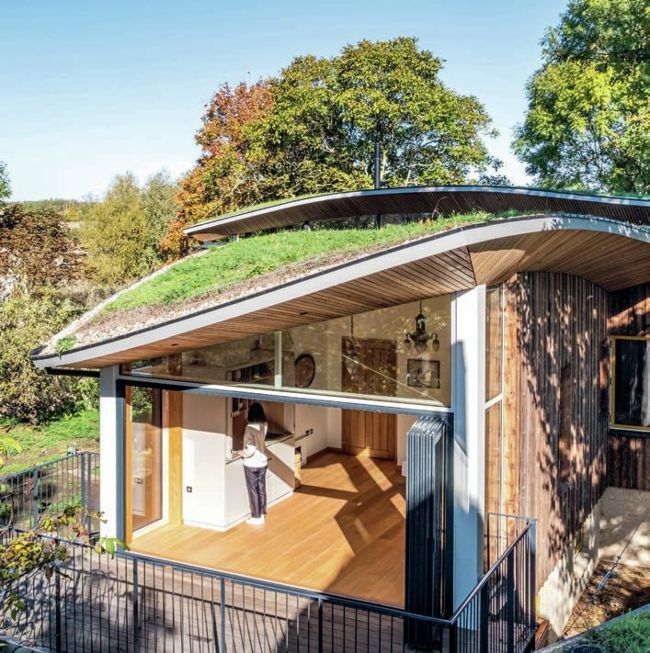
The curved roof of this eco home in Suffolk adds plenty of wow factor, topped with a green roof that is designed to blend in with its surroundings by looking like rolling meadows. The design was a collaboration between MAP Architecture (
www.maparchitecture.co.uk) and Jon Broome Architects (
www.jonbroome.co.uk)
DAVID VALINSKY
As self builders, your roof offers an opportunity to enhance the character of your house, so that the elevations look stylish and cohesive. And floors can do more than provide a stable footing, helping with things such as acoustics and thermal efficiency, too. How these elements are built should be considered from day one of the design stage.
PITCHED ROOFS
Sometimes a pitched roof is the most obvious choice for your home, particularly if you want a traditional feel to the building. One key benefit of a slope is that it throws off rain and snow, which makes it a durable construction.
Traditionally, pitched roofs were cut on site – with rafters, purlins and ceilings joists forming the structure. This is still often a good approach if all of the roof space is to be used as accommodation; especially if there are lots of dormers. A quicker and cheaper way is to build a roof with trussed rafters, which are designed to use the minimum amount of timber. These are prefabricated and assembled on site quickly.