RETROFITTING MVHR
Discover the best strategies for installing a mechanical ventilation & heat recovery system as part of your renovation project
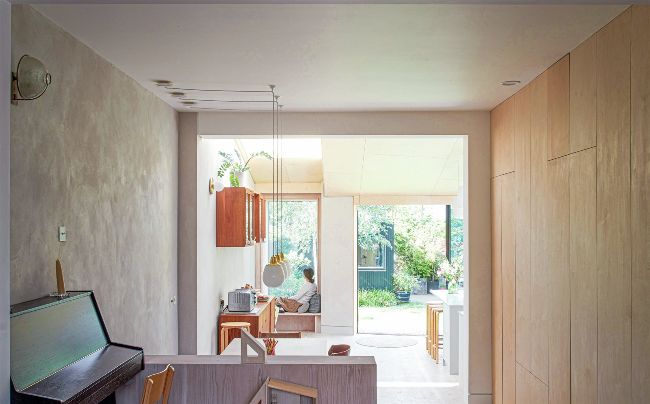
Rise Design Studio crafted the design of the renovation and extension of this house in North London. As part of the project, the thermal envelope of the house was upgraded to establish a wellinsulated, airtight shell. MVHR provides fresh filtered air throughout the property, while also retaining the heat that has already been used to warm the interiors
Good ventilation is a critical factor for creating a healthy internal living environment, as poor air quality can lead to numerous issues including condensation, damp and the accumulation of unpleasant smells, allergens and contaminants.
The removal of stale air and its replacement with a fresh supply can be achieved by various means. One option is to install a mechanical ventilation and heat recovery (MVHR) system, which recaptures outgoing heat from your home to offer savings on energy bills, while also offering improved indoor air quality. So, there’s good reason to consider including MVHR as part of wider works to improve your property’s thermal efficiency.
MVHR basics
First, let’s break down how MVHR works. This system removes stale air from your home and introduces a fresh supply. Simultaneously, it extracts and recycles heat from the outgoing stream and transfers the warmth to the incoming flow, potentially reducing your reliance on boilers, heat pumps etc to deliver heat through underfloor heating (UFH) or radiators. To get the best out of MVHR, it should be installed in a well-insulated, airtight home where warmth isn’t going to leak out via the building fabric. Many existing houses won’t meet those criteria – so, you’ll almost certainly need to make upgrades to thermal performance as part of your project.