Rural conversions & how to get planning
If you’re after a unique home, far from the urban hustle and bustle, a conversion could be the path for you. Mike Dade explores the planning opportunities

ANTHONY HARRISON
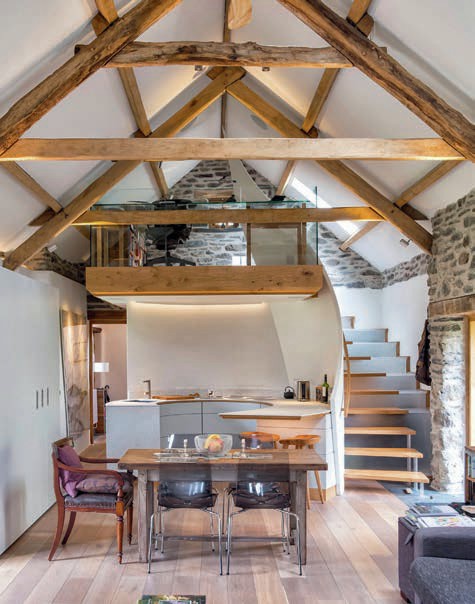
Above left & above: Simon Baker’s sensitive conversion in Snowdonia National Park has created a delightful, light-filled home with amazing views; all without having to punch extra holes in the barn’s fabric
F
or those wanting to create a new home in the countryside, converting an existing building has long been an attractive option. This approach can not only get you around restrictive planning policies that otherwise prevent new homes in rural locations, but also potentially enable you to build your way to a house packed with character and kerb appeal. So, what sorts of opportunities are out there, and what do the planners allow these days?
Types of conversion project
Many of you are likely picturing a barn conversion, probably in the form of a traditional farm building. Old storage barns, granaries, dairies, byres and oasts can all lend themselves to transformation into attractive homes – as do Victorian-era equestrian structures.
There are, however, plenty of other opportunities out there. Many modern agricultural buildings are suitable for conversion, for example, and often enable a highly contemporary architectural approach. Other types of structures that might offer potential include equestrian buildings; business, workshop and industrial premises; chapels; schools; pumping stations... the list goes on. In fact, almost any type of building in the countryside, of a suitable scale, might be capable of conversion into a comfortable, unique contemporary home.