GETTING PLANNING CONSENT FOR AN ANNEXE
Planning expertJulia Riddleshares the key steps and common challenges attached to this type of project, including navigating local regulations and presenting your case
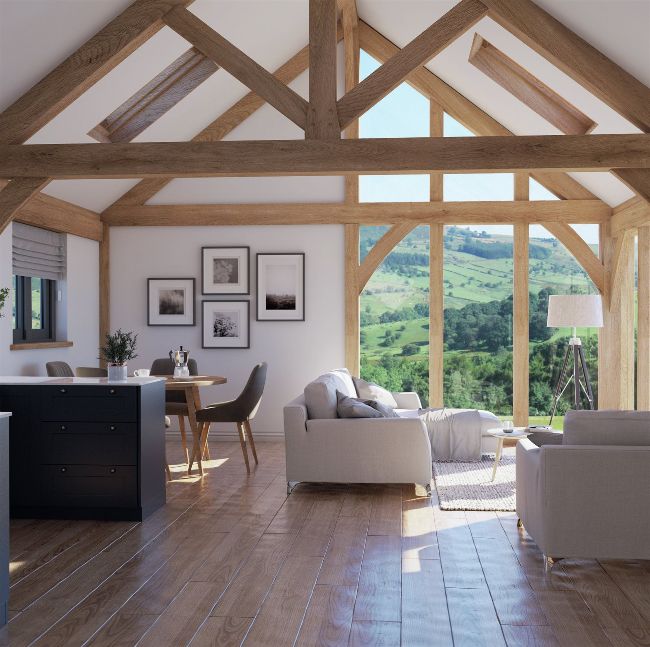
This Oakwrights (
www.oakwrights.co.uk) annexe features a carefully zoned kitchen, living and dining area, complete with an eye-catching semi-glazed gable
An annexe is a self-contained living space that can be built within the grounds or curtilage of an existing residential property. These buildings are intended to be used as standalone accommodation for family members associated with the main residential dwelling. Unlike a spare room, this type of project is ideal for adding flexibility to your current home, offering privacy and independence when required. The space may include facilities such as a bedroom, bathroom, kitchen and living area. Here, I’ll guide you through the core considerations you need to understand before building your ideal annexe.
Do I need planning permission?
This type of project will always require planning approval. Annexes differ from garden rooms and outbuildings, which are incidental to the use of a dwelling or main residence, and do not always require formal consent. An outbuilding might be used as storage, a summerhouse, home office or gym, but crucially, it could not be lived in without use of amenities in the main house.