Building green: going fabric first
Whether you’re creating a new house from scratch or renovating an existing property, there’s a few basic eco principles you should aim to get right
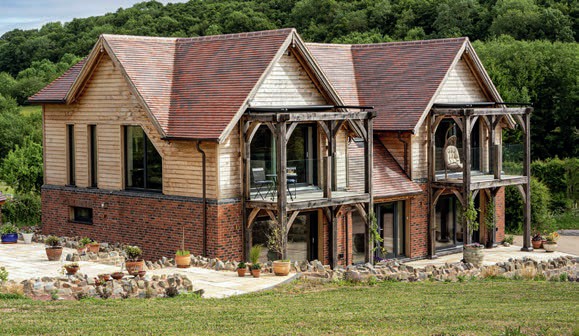
Above: This project combines an Oakwrights oak frame with SIPs encapsulation, providing an efficient environment for a ground source heat pump with mechanical ventilation and heat recovery to deliver a comfortable home with high indoor air quality
MARK BOLTON / OAKWRIGHTS
Climate change is high on the agenda right now, both in the political sphere and on an individual level. So, it’s no wonder that we’re trying to reduce our carbon footprints as much as possible. A good place to start is in our homes, where our choices in terms of construction methods, materials specification and more can have a major impact on our projects’ upfront and long-term environmental impacts.
In this 20-page guide, you’ll find out how to heat your home in an eco-friendly way, and how different systems can help you achieve your goals. But before you start developing a central heating and hot water strategy, it’s important to try and reduce your household demand as much as possible. Here’s what to consider.
Fabric first
Whether you’re self building, renovating or extending, start by focusing your project’s design and budget into the structural shell so that you can create a low-energy home that requires minimal heating. By reducing energy demand in the first place, you’ll lower consumption and carbon emissions. “It’s important to look at how insulation, airtightness and ventilation all work together,” says Bill Butcher, director at Green Building Store.