Doorways Six Ways
It’s an open-and-shut case when securing the henhouse with suitable doors.
ARTICLE & PHOTOS by Frank Hyman
How many doors does your house have? In our little two-bedroom house, I count 16. That includes screen doors and closet doors as well as attic and basement doors.
But that’s not counting the refrigerator door, cupboard doors and even the door to the dryer in the basement. So it should come as no surprise that even for a small coop and hen habitat, you’ll want at least six doors (and in this case, gates equal doors).
1. a gate into the pen
2. a chicken-sized automatic door from the pen into the coop
3. a keeper access door, also from the pen into the coop
4. one, if not two, coop clean-out doors outside the pen for scooping poop into one or two compost bins
5. a hatch into the nest box
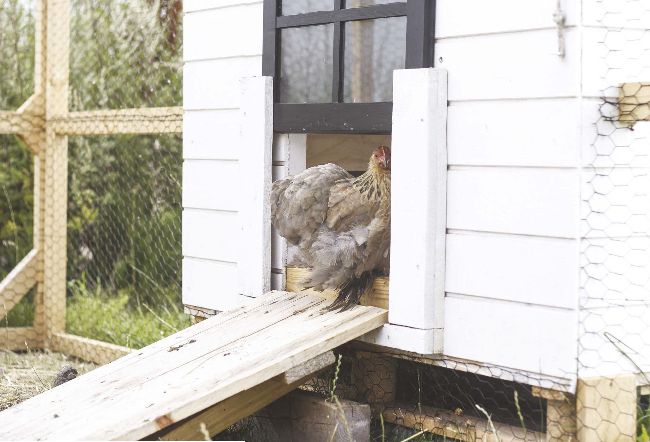
6. a doorway into the chun-nel (a chicken tunnel to a fenced foraging area)
ANNIKA OLSSON/SHUTTERSTOCK
Swing In Or Swing Out
For the doors on the coop it’s better that they open out. If they were to open in, they would conflict with the bedding and poop. Plus, you’d have to leave a gap at the bottom so they could swing in above the floor. That would create drafts and a space for snakes and mice to enter. The same issues apply to the gate. If the hens have scratched a bunch of debris in front of the gate, it will be difficult to open if it swings in. Installing doors so that they open out also makes it easier to install the hinges.
All Squared Away
How many gates have you seen that are sagging? Plenty, right? The remedy to sagging gates is to incorporate a diagonal piece of wood. In construction, triangles are more stable than rectangles.