RODENT CONTROL
Follow these seven strategies to keep mice and rats out of the coop.
by Mike Wilhite
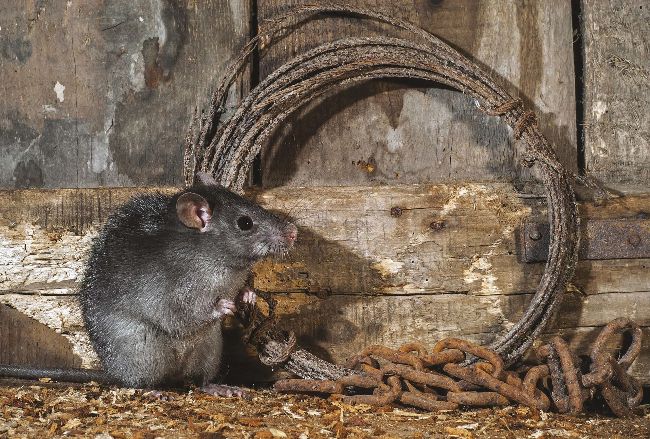
Rats travel along walls and follow the same routes as they make their rounds foraging for food each night.
Whether you raise poultry for market or maintain a backyard flock, chicken coops are a magnet for rats and mice.
Rats often appear in the fall, when their external food sources are depleted by harvest. They emerge from the fields, where they live in burrows, to forage and feed around buildings. In contrast, mice will establish colonies within buildings and might never venture outside.
Rodents are responsible for more than a quarter of all farm fires of unknown origin, but the main risk from infestations is feed contamination and disease exposure to you and your flock. A rat can produce more than 40 droppings per day and a gallon or more of urine per year, while a single mouse can produce more than 80 droppings per day and more than a quart of urine per year. A variety of human and livestock diseases are spread through contact with rodent excrement, which include cryptosporidiosis, toxoplasmosis, leptospirosis, brucellosis and salmonellosis.
Rats can also become predatory, killing and feeding on adult chickens, but they can be especially hard on young chicks. As a professional wildlife control operator and hobby farmer for years, I’ve personally witnessed rat infestations that consumed hundreds of day-old chicks within a couple nights. Because rodents are mainly nocturnal feeders, it’s easy to seriously underestimate their numbers and impact on your coop.