1990 s
Love and Liverpool
THE NINETIES WOULD BE THE DECADE OF PAUL MCCARTNEY’S VINDICATION. ARMED WITH A NEWFOUND SENSE OF EXPERIMENTALISM, HE PRODUCED SOME OF HIS MOST INTERESTING AND ECLECTIC WORK – THOUGH TRAGEDY LAY AHEAD…
MARK LINDORES
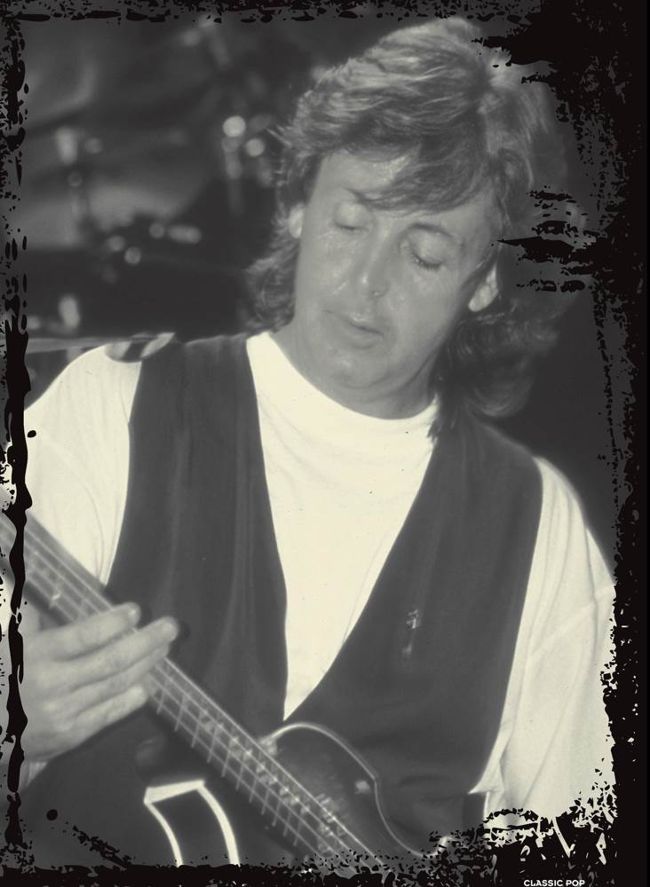
With his Hofner violin bass symbolically back in favour, the Nineties would find McCartney more at ease with his Beatles past
© Getty Images
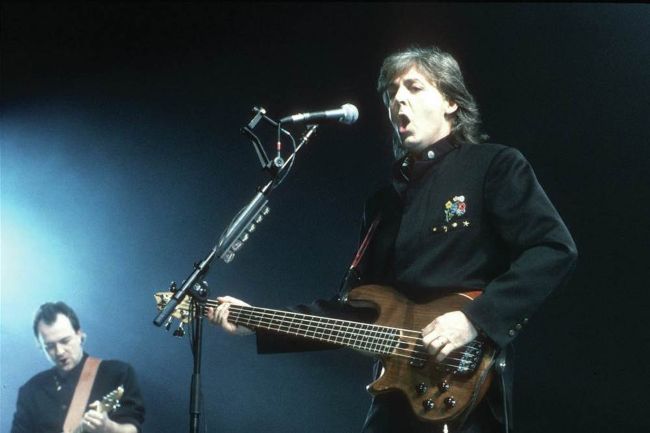
The World Tour reaches London’s Wembley Arena, January 1990
© Getty Images
Having embarked on his first major tour in a decade, Paul McCartney began the Nineties with a rapturous reception to his homecoming when the Paul McCartney World Tour arrived in the UK for multiple dates in Birmingham and London in January 1990. Although it was envisioned to promote his 1989 Flowers In The Dirt album, the tour boasted an abundance of Beatles classics, an indication that Paul was beginning to reclaim his musical legacy after a decade in which his contribution to many of those songs had been diminished by many in the elevation to “martyrdom” of John Lennon following his tragic death.
As well as realising how much the Beatles catalogue meant to him, McCartney was unexpectedly overwhelmed by the reaction of the audiences, many of whom, of course, were experiencing the songs live for the first time. “Of course the songs are personal and I know what and who they’re about, but I don’t think about that when I’m performing them,” he told MTV. “When I play them live I look out and I see people in the audience and see what the songs mean to them, the way they look at each other and interact with each other… it is very moving.”
Performing for almost three million fans at 108 shows and breaking records for the biggest paying audience ever (over 184,000 people in Rio de Janeiro), the Paul McCartney World Tour (also dubbed the “Get Back Tour”) was a resounding success – not only on a commercial level but also personally, since it helped to reignite his passion for live performance.
“WHEN I PLAY LIVE I LOOK OUT AND SEE PEOPLE IN THE AUDIENCE AND SEE WHAT THE SONGS MEAN TO THEM… IT’S VERY MOVING”
The tour was documented on the Tripping The Light Fantastic live album and on VHS as Get Back, a concert film directed by longtime Beatles associate Richard Lester. From Rio To Liverpool, a documentary of Paul’s Liverpool show, was also filmed, and then screened on Channel 4. The concert took place before 50,000 fans at Liverpool’s King’s Dock, and McCartney described the show as “one of the greatest moments of my career.”
Having toured the world’s grandest and biggest venues, Paul next went back to basics when he agreed to perform a set for MTV Unplugged in January 1991. At this point it was a fledgling show that gave coverage largely to unknown and up-and-coming acts, so McCartney’s appearance helped popularise the format and set it on the path to becoming the phenomenon it was destined to be, with careerdefining sets from the likes of Nirvana, Mariah Carey, Eric Clapton and R.E.M.
It was a complete polar opposite of his mammoth world tour, but McCartney embodied the essence of Unplugged. He chose a set consisting of rarelyheard songs from his formative years (I Lost My Little Girl), covers that had been influential in shaping his musical identity (Gene Vincent’s Be-Bop-A-Lula, Jesse Fuller’s San Francisco Blues) and a crowdpleasing smattering of stripped-back versions of fan favourites (Here, There And Everywhere, We Can Work It Out). He became one of the first artists to capitalise on an MTV Unplugged performance when the set was released as an album, Unplugged: The Official Bootleg the following May, promoted by six secret gigs in tiny venues. The album reached No. 7 in the UK and became his biggest-selling US album since Tug Of War in 1982.
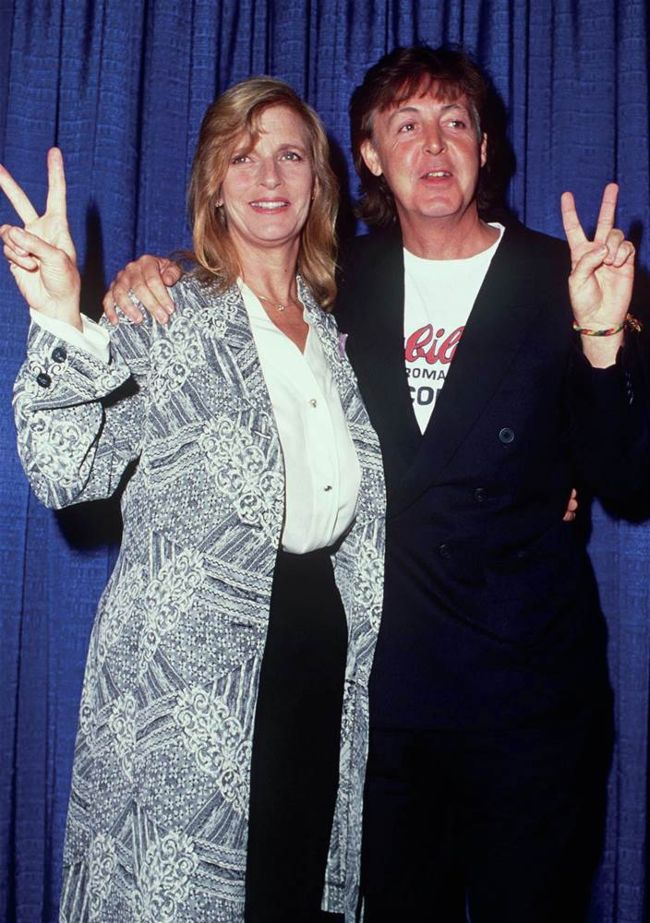
Paul and Linda’s partnership was, wrote biographer Philip Norman, “the happiest and most durable in pop”
© Getty Images