RAW!
Serving and eating raw fish can sound scary but, for Pollyanna Coupland, a crudo, tartare or ceviche fits the bill like little else during the summer months. Join her as she urges you not to shy away from the uncooked, sharing expertise and four knockout recipes that keep things zingy, zesty and fresh
WORDS, RECIPES AND FOOD STYLING POLLYANNA COUPLAND
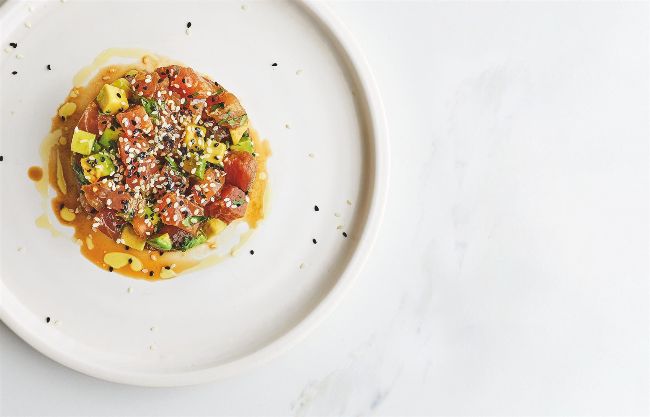
Tuna tartare with avocado, soy and ginger
PHOTOGRAPHS INDIA WHILEY-MORTON
While many of us wouldn’t think twice about ordering a sea bass ceviche or salmon tartare in a restaurant, we tend to be a bit more hesitant about preparing raw fish at home. I want to change that! The preparation for raw fish dishes tends to be incredibly simple (because, of course, it requires no cooking) and the flavours are always bright and refreshing. The most important part of the process is sourcing your fish.
Raw fish dishes are meant to be simple, allowing the fresh fish to shine through. Because of this simplicity, however, everything matters: the quality of the fish, the way it’s cut, the perfect balance of the dressing, and something to give the dish contrasting texture. While there’s no one correct way to do things, the following ideas and guidelines should ensure success.
BUYING THE RIGHT FISH
As with any fish, look out for bright clear eyes, red gills (not brown) and a smell of the ocean (rather than a ‘fishy’ smell). For raw fish dishes you need to go to a trusted fishmonger or decent online supplier rather than the supermarket, as quality and freshness make such a difference to the final flavour and texture. This doesn’t mean you need to hang around the fishing port to grab fish fresh off the boat – fish destined to be eaten raw should have been frozen at -20°C or lower for at least 24 hours to kill off potential nasties.
Even the finest, most expensive sushi and sashimi have to be legally frozen first in the UK and many other countries, and a lot of top quality fish is frozen at sea as soon as it’s caught to preserve freshness. There are some great online suppliers that deliver this fish in its still-frozen state, and good fishmongers will be able to tell you what’s been frozen in advance and is therefore safe to eat raw.