CAPTURE THE COAST!
TEN WAYS TO ELEVATE YOUR COASTAL CAPTURES
Explore the coast’s treasure trove of photographic subjects and capture stunning images from the clifftop to the water’s edge, with Andrew James
Andrew James
When you’re short on photographic inspiration and need to give your image-taking a real boost, there’s one place you can rely on to provide some extra W inspiration – the coast. Dramatic seascapes, interesting textures, tidal flows and moody weather conditions are all part of the seaside’s enviable package of photographic opportunities.
In fact, it’s one of the most dynamic and ever-changing locations you can tackle, meaning that there’s always something new to find and different conditions to master. From the natural movement of the tides to the solidity of built objects and the fascinating wildlife that lives and breeds along its edge, the coast demands different techniques to capture its essence.
PART 1
CAPTURE THE ENERGY OF THE TIDE
Harness tidal power for dynamic images
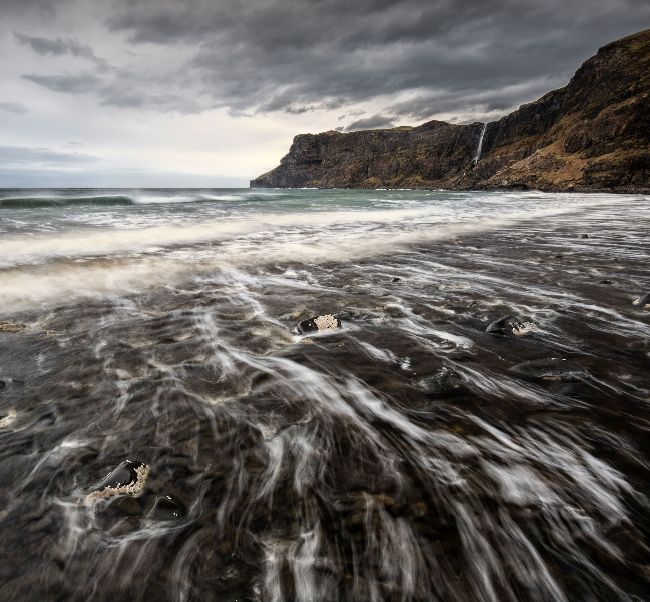
The ebb and flow of the tide is all about energy. A slow shutter speed that can capture this movement as a blur will convey a sense of this action. The camera needs to be on a sturdy tripod and carefully fixed, so it isn’t ‘jogged’ by the waves during the exposure. This can be tricky in shifting sand, so make sure you push the legs firmly into the ground and weigh the tripod down, if possible. Some tripods allow you to fix spikes to the base of the legs, and these are an advantage for holding it steady. Timing the start of the exposure as the waves are pulling away from you can create interesting recession lines to draw the viewer into the frame.
It’s best to fire the shutter with a remote release, so you can start the exposure at the perfect moment. If using the camera’s self-timer, factor in the delay between the shutter button being pressed and the camera’s shutter opening.
PRO SHOT
Isle of Skye
With a slow shutter speed, water running away from the camera can be blurred. At this dark sand beach on the Isle of Skye, the light tones of the water act as leading lines.
Bird at the water’s edge
If you prefer to photograph your wildlife from dry land, nature reserves with marshes and tidal areas often provide purpose-built hides where you can take images of wetland birds. Alternatively, sitting near the shoreline can put you close enough to shore-feeding birds as they forage for food, such as this Turnstone. Don’t chase your subject. Sit still and let them move towards you.
Settings: 400mm, 1/2000 sec at f/8, ISO 800
Seal in the water
Photographing seals on the beach is easier than capturing them from a boat, but shots of the animal in its natural environment will have maximum appeal. This image was taken from a seal-spotting boat on the Norfolk coast as the curious seals were poking their heads out of the surf. The moustache-like splash of the wave hitting its snout is as important as the seal itself.
Settings: 400mm, 1/1000 sec at f/6.3, ISO 3200
Andrew James
PART 2
BE A MARINE WILDLIFE PHOTOGRAPHER
Take advantage of the variety of coastal wildlife
Marine wildlife is often seasonal and location-specific, but when seabirds and marine mammals come to the shore or cliffs to breed, they often do so in large numbers, providing a superb opportunity to observe species that are often beyond our reach.