Shoot for the light
Peter Fenech explains how you can adapt your shooting technique and approach to master every lighting condition
Peter Fenech
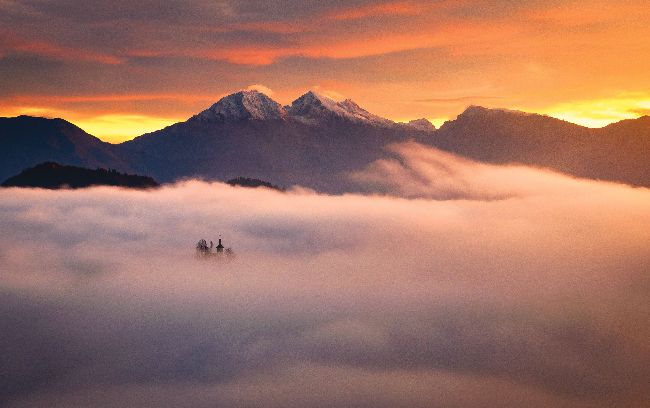
Colour range One of the reasons this image is successful is that it contains a full range of colours, from cooler hues in the shadows to fiery reds and yellows in the highlights © Fabian Fries
Saying that you need to alter your approach to capturing light according to any given scene might seem like an obvious statement. However, it is surprising how often we forget to do this once presented with a photogenic subject. In our effort to quickly capture the scene before the opportunity is lost, photographers fail to tailor their shooting techniques to make the most of the angle, intensity and colour balance of the light. This is even truer in the digital age, as we have become more accustomed to being able to correct lighting and colour in post-processing.
Of course, exposure can be corrected with ease in RAW processing applications, and in Photoshop multiple frames can be blended for a wider dynamic range, and lighting effects can be applied or removed at will. In this feature, though, we will be showing you more than simply ways to correct lighting errors.
By familiarising yourself with the main characteristics of light in various conditions, you can learn how to focus on the most attractive aspects of each lighting type, get all of the potential benefits and avoiding the common pitfalls.
By reacting to and using the light you have at your disposal, rather than aiming to overpower it and build up novel styles in post-processing, you can improve your photography massively. Here, we’ll explore each of the common lighting conditions and reveal incredible picture opportunities at any time of day, and in any weather.
Capture golden hour landscapes
Work with low sun, temperature and colour for better sunrises and sunsets
It is common knowledge that early morning and evening are preferred times for landscape photography. Sunrise and sunset provide a combination of directional, detail-enhancing light and attractive, warm colours. These are accompanied by soft shadows, caused by the greater refraction of light as it passes through the atmosphere at a more oblique angle.
Such lighting is loved by landscape shooters because it not only brings out texture in natural surfaces and adds a warm glow to highlights, but the exposure is easier to manage, since the tonal spectrum is a better fit for the dynamic range of most cameras.
Anyone who has taken images during these times, however, will be aware of certain difficulties that come with managing such high-saturation, low-angle sunlight. While the warm colours are naturally attractive to the human eye, they do have a tendency to swamp the scene, dominating the natural hues in the landscape. Without care, this can result in landscape images being stripped of impact, leaving little in the way of colour depth and contrast, which can be disappointing after witnessing such a magical sunrise.
There are also the practical challenges of shooting into a bright, directional light source of great intensity. Other than the safety issues of shooting with the sun in the viewfinder - for both the photographer’s eyes and the camera’s sensor - there is always a risk of flare, ghosting and other light-leak artefacts. You can either choose to avoid these through careful positioning of the camera, or embrace them for creative effect. This choice will often depend on the scene type, the atmosphere you are attempting to create, and to some extent the equipment in use. Regarding the latter, if you are using a wide-angle lens, which is prone to flaring, it may be best to include rather than attempt to avoid such optical effects, especially if you have to incorporate the sun in your frame directly.