BREAKOUT
After a long, dark age, Atari is finally stepping back into the light
BY LEWIS PACKWOOD
ATA RI ACROSS TIME
With foundations laid way back in the early 1970s, Atari has a bit of history in its locker, to say the least. The company’s story has been recounted at length in several books, but in this timeline we’re marking some key moments in its evolution, including how the Atari name splintered across multiple brands during the mid-’80s.
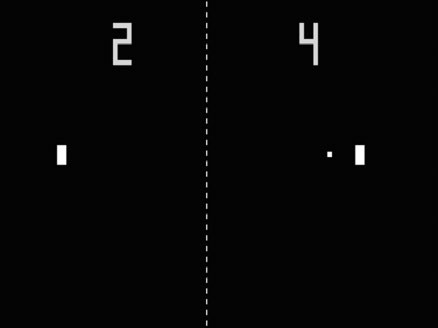
1972 Nolan Bushnell and Ted Dabney establish Atari. The company’s first release is Pong, designed by Al Alcorn, which goes on to be a global hit

Atari co-founder Ted Dabney

1979 Nolan Bushnell leaves Atari after a fallout with Warner management. He is replaced as Atari CEO by former textiles industry executive Ray Kassar
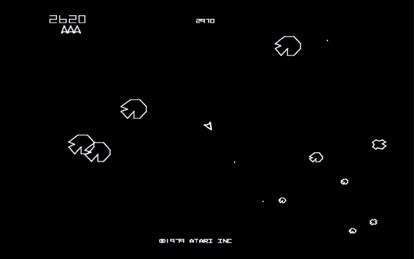
1980 Asteroids (below) and Missile Command are released in arcades, while a VCS version of Taito’s 1978 hit Space Invaders is launched, prompting sales of the console to skyrocket
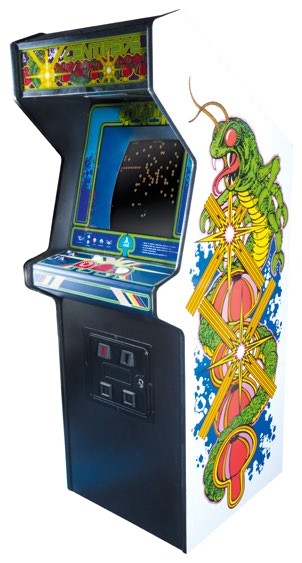
1981 Centipede (below) and Tempest are released in arcades
Nolan Bushnell doesn’t mince his words when it comes to how the company he co-founded was treated after his departure: “You hate to see your child being abused.”
Atari has certainly endured some tough years since its ’70s peak. The failure of the Jaguar console in the mid-’90s saw this oncerevered brand passed between owners: first Hasbro Interactive, then French publisher Infogrames, which adopted the Atari name in 2003, before encountering financial difficulties of its own. It declared bankruptcy in 2013, prompting a fire sale of its properties – when it reemerged the following year, the company had been slimmed down to ten or so staff, headed by Frédéric Chesnais, who had bought a 25 per cent stake in the company for 400.
Checquered by bizarre ideas and disappointing releases, from Atari-themed casino games to the infamous Speakerhat (see ‘If the cap fits’), the Chesnais years are regarded by Bushnell as little short of a disaster. “He basically did more to destroy the brand than any human being possible,” he says, clearly aggrieved. “It was all about putting money in his pocket.”
Bushnell isn’t the only one who feels this way. Mike Mika, president of Digital Eclipse, has long been an Atari fan. “I grew up with the brand – it was such an influential part of my life,” he enthuses. “In its heyday, it was just so inspiring, so exciting.” He too was distraught to see what happened to the company during what he calls its “oddball years” – a softer assessment than Bushnell’s, but Mika was no less disappointed. “It felt like that cool uncle you looked up to as a kid that hits rock bottom,” he says. “It was sad to watch it make bad life decisions.”
If you’ve been following any of the recent developments at Atari, you’ll know what’s coming next. Recent years have brought something of a renaissance for the company.
A steady stream of Recharged titles have delivered reimagined takes on classics such as Asteroids and Breakout, as well as Jeff Minter’s take on the unreleased Atari coin-op Akka Arrh, and the famous logo has returned to new gaming hardware in the form of the Atari 2600+ and 400 Mini. The company has been on something of a spending spree, too, acquiring AtariAge, MobyGames and two developers, Nightdive Studios and Mika’s Digital Eclipse. “It’s a game company again,” Mika says of his new employer. “It wants to do great things. Instead of only looking back, it’s looking forward, and for the first time in a long while I get goosebumps thinking about the kinds of things that are happening.”
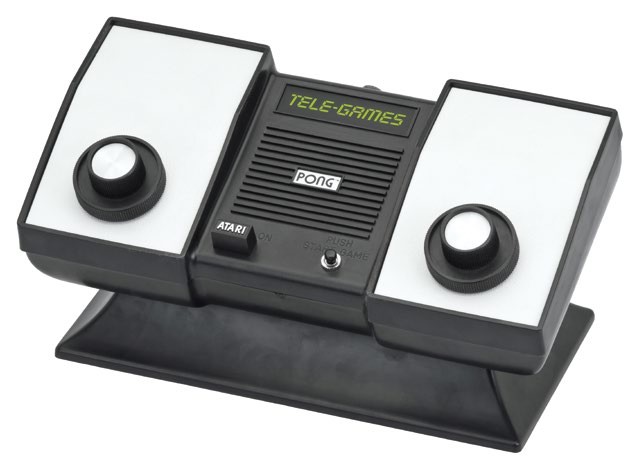
1975 Atari releases Home Pong, initially branded as Sears Tele-Games Pong. A flood of Pong clones soon arrives from rival manufacturers
EvanAmos

1976 Warner Communications buys Atari for $28 million. Money from the sale is used towards development of the Atari VCS console
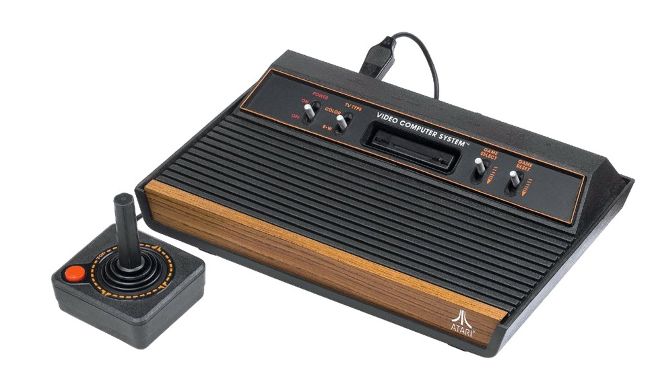
ys m 1977 Atari’s VCS is released, to modest sales at first
Evan Amos
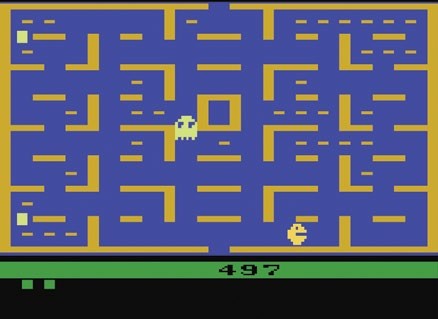
1982 VCS is renamed Atari 2600, and its Atari 5200 followup is released, but sells poorly. A 2600 conversion of Namco’s Pac-Man is launched, and becomes the console’s best-selling game. A tie-in game for the film ET is rushed through development in weeks in order to hit shelves in time for Christmas
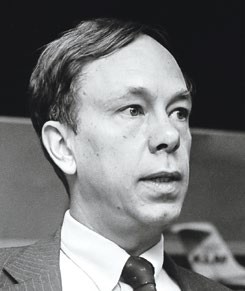
1983 After disappointing sales over Christmas 1982, retailers return thousands of unsold cartridges. Atari lays off almost 22 per cent of its US staff, and Ray Kassar is replaced by James Morgan (below), formerly of tobacco firm Philip Morris
Rob Croes, Anefo (Nationaal Archief)
So, what changed?
As far as Bushnell’s concerned, it’s simple: “When all of a sudden a good person gets involved, it’s a real big relief.” The person in question being
Wade Rosen,
who bought a ten per cent stake in Atari in March 2020, becoming chairman of the board, then replaced Chesnais as CEO in April 2021. Bushnell has considerably kinder words for Rosen than his predecessor: “He’s a man of good values, hardworking, smart as a whip. What more could you ask for?”
For his part, Rosen insists becoming CEO wasn’t the plan. “At least not anytime soon,” he says. Atari was initially a side gig, alongside an executive role at Scientific Life Solutions, a biotech startup, and board positions at two companies he’d previously founded, Wishlist Rewards and ThrivePass. But when the Atari deal came up, Rosen found himself asking: “What have I been passionate about my entire life? Because what those entrepreneurial journeys showed me is that, every company, it’s a ten-year commitment at least. It’s like a decade tour of duty if you’re going to do it right. And so, as some of these [companies] were winding down, or I was taking a nonexecutive role, I asked, ‘OK, what would I want to do for a decade?’ And the only thing that I had been passionate about my entire life, that had been consistent no matter where I lived or what I was doing, was videogames.”