CHANGING DESTINY
With Wuchang: Fallen Feathers, Chinese studio Leenzee aims to soar to the heights of its field
By Alan Wen
Game Wuchang: Fallen Feathers Developer Leenzee Publisher 505 Games Format PC, PS5, Xbox Series Origin China Release 2025
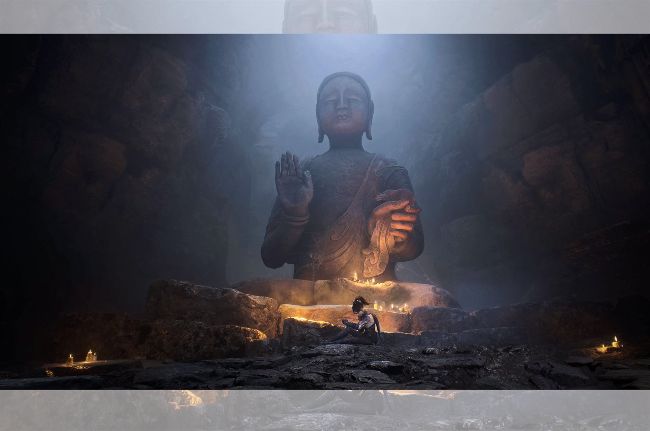
Whether it’s the dungeon cell in Northern Undead Asylum or an operating table in Iosefka’s clinic, we’re used to waking up in mysterious circumstances, trying to make sense of where we are. Our introduction to Wuchang fits this mould – at least, it does at first. The eponymous heroine awakes in a dark cave, illuminated only by the candles arranged along the base of an enormous statue of the Buddha. Following the daylight to the exit, though, the gorgeous vista that welcomes us – green mountains and forest – has more in common with Link’s first view of Breath Of The Wild’s Great Plateau than the dark fantasy world we might have expected. This is Worship’s Rise, the game’s starting area, and it’s only after wandering between friendly citizens and temples that we encounter any hostility. You’d hardly suspect there was a deadly plague sweeping the land, but appearances can be deceiving: beneath this veneer of serenity, chaos is brewing. The game’s director, Xia Siyuan, sums it up in plain, blunt English: “Surprise, motherfucker!”
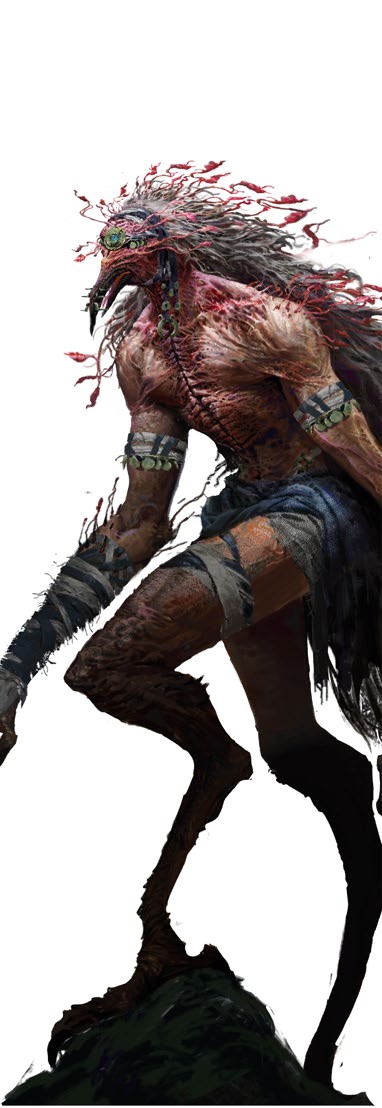
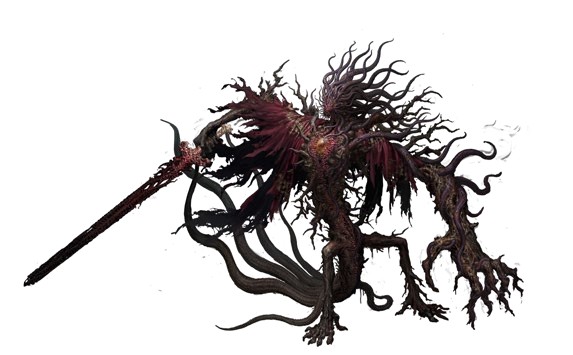
We’re in Chengdu, the capital of China’s Sichuan region, to visit Leenzee, the studio co-founded by Xia in 2016 – and to become the first western publication to playWuchang: Fallen Feathers, the game it’s hoping will be its breakthrough hit.
We find the studio at a critical point in development, right between the game’s alpha and beta. That may explain how busy things are. Xia just about hides his fatigue, as the studio founder juggles multiple other roles, from producer to CTO. While walking past rows of team members at their workstations, we notice the prominence of neck pillows, and as we leave the studio after sunset, more staff appear to be just arriving for their shifts. (We’re told that late hours – but late starts – are the norm, a preferable arrangement particularly during hot summer days in a part of the country where air conditioning isn’t common.)
Leenzee is just one of a new wave of Chinese developers with the ambition and expertise to make games with lavish production values that put them on an even footing with triple-A studios in the west. The obvious precedent here is GameScience’s Black Myth: Wukong. Both games are hardcore FromSoftware-influenced action RPGs with a culturally Chinese twist, both announced with substantial realtime, in-engine gameplay footage, as if preempting any scepticism about the region’s ability to compete in this arena. Of course, Black Myth was a global success, selling ten million copies in its first 24 hours and beating even Elden Ring and Cyberpunk 2077’s peak concurrent player count on Steam at launch. It’s a precedent that Xia, and Leenzee, naturally seem keen to follow.
Such games, though, are just the tip of the iceberg when it comes to China’s growing influence in videogames. Chinese tech giants Netease and Tencent have been investing heavily in game development in recent years – albeit mostly across the sea, in Japan. Tencent has stakes in PlatinumGames, FromSoftware parent company Kadokawa Corporation, and Slitterhead developer Bokeh Game Studio, while Netease acquired Grasshopper Manufacture in 2021 and established Nagoshi Studio, led by former Sega veteran and Yakuza creator Toshihiro Nagoshi, the following year.