the Chameleon
NEVER REPEATING, ALWAYS REINVENTING: TILDA SWINTON IS THE ULTIMATE SHAPESHIFTER. SHE TELLS US WHY SHE HAS TO KEEP MOVING
WORDS TOM ELLEN
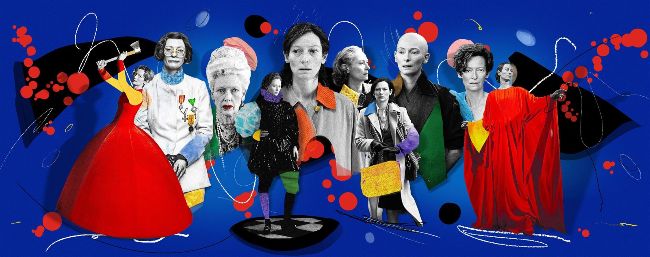
The Human Voice; Snowpiercer; The Grand Budapest Hotel; Orlando; We Need To Talk About Kevin; The Souvenir; Michael Clayton; Doctor Strange; A Bigger Splash; Suspiria.
ILLUSTRATIONS SELMAN HOŞGÖR
You trained as a stage actor, but you’ve said it ultimately wasn’t what really interested you, and that “you were looking for film, always”. What did you feel you were able to do as a film actor that you weren’t as a theatre performer?
In actual fact, I never trained at all. I was never really interested in being an actor of any kind. I was a writer and had gone to university as such. But I was smitten with the idea of working in cinema in any way possible, imagining myself more likely in the art department or writing film criticism than ever performing in front of the camera. It was only when I met Derek Jarman, and he opened up before me the possibility of being in film in the unvarnished, unperformative way that his films allowed, that I grew an interest in being a film performer.
Although the first film I made with him was Caravaggio in 1986, it was the Super 8 films we made together into the ’90s (Aria, The Last Of England, The Garden) that made me begin to feel both comfortable and effective in front of the lens. Essentially home movies, improvised and silent, the performances I made for those films were closer to dance than anything interpretative or constructed around a written text, such as most performances made for the theatre. I was a co-creator of the context, and the shapes I made were not ‘disguised’ behind a ‘character’. This is significant, I realise now, not only because of the free and collaborative way in which we worked together but also, crucially, the sort of material of the performances themselves: raw and untidy and random. A sort of child’s play…