GODS AMONG US
TILDA SWINTON
The constant chameleon who never stops experimenting
WORDS TOM ELLEN
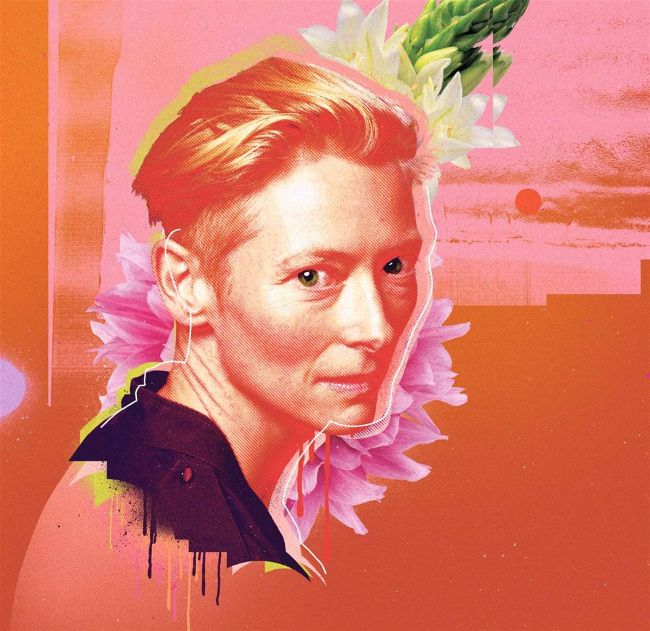
ILLUSTRATION CHRISTOPHER LEE LYONS
In our regular series, we pay tribute to the towering, mega-watt stars who still roam Hollywood
KATHERINE MATILDA SWINTON was 13 when she saw the future.
Wandering the hallways of her family’s sprawling new home — Kimmerghame House, just a few kilometres south of Duns, in the Scottish Borders — the teenager stared wide-eyed at portrait after portrait of her ancestors down the ages. Kimmerghame had been the baronial seat of Clan Swinton for centuries, and it was a revelation for the youngest member of said clan to see her own features reflected back at her, again and again, in different eras, guises and outfits.
“That was significant for me,” she told an audience at the SXSW Festival in 2014. “To see all these paintings that looked really like me.
Images of that same face — my own face — but with a ruff or a big wig… I don’t know if that made me think of myself as a performer, but it definitely made me think of myself in a frame.”
In the intervening years, the most interesting areas of the cinematic landscape have become a kind of extension of Kimmerghame’s walls. Moviegoers have been treated to that same face — Swinton’s face — not only in ruffs and big wigs, but headscarves, crowns, feather boas, false dentures, bald caps and latex liver spots.
That same face has been female, male, teenaged, octogenarian and 2,000 years old. It’s belonged to a vampire, a witch, a rock star, a robot, a corporate lawyer and everything else in-between. “It’s all just dressing up and playing,” Swinton told Jonathan Ross in 2018, but the truth is: anyone can put on a costume. Only a handful can become the character inside it.
Perhaps more than any other current actor, Tilda Swinton has come to embody the idea of ‘range’. “What isn’t she?” mused her frequent collaborator, Jim Jarmusch, to Variety in 2014. “There’s nothing she can’t do, nothing she can’t play.” Indeed, for someone whose natural appearance is so striking, it’s almost unsettling how completely Swinton can disappear into a role — be it the buck-toothed autocrat Mason in Snowpiercer (imagine Margaret Thatcher designed by Aardman Animations) or dead-eyed pariah Eva in We Need To Talk About Kevin, staring blankly across a prison table at her mass-murderer son.
THE BOX OFFICE
Tilda Swinton’s top five money-makers
AVENGERS: ENDGAME
$2.8 billion
THE CHRONICLES OF NARNIA: THE LION, THE WITCH AND THE WARDROBE
$745 million
DOCTOR STRANGE
$678 million
THE CHRONICLES OF NARNIA: PRINCE CASPIAN
$419 million
THE CHRONICLES OF NARNIA: VOYAGE OF THE DAWN TREADER
$415 million
* Global box office, according to BoxOfficeMojo.com
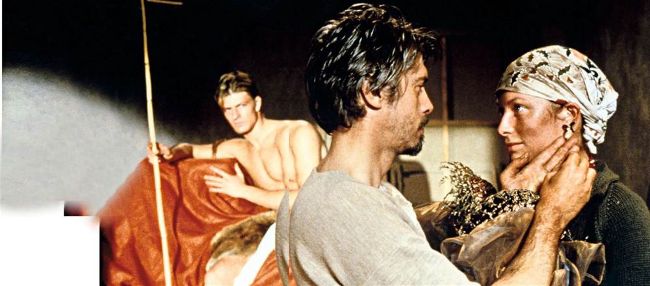
Clockwise from above left: Swinton in 1992’s Orlando; With Sean Bean and Nigel Terry in Derek Jarman’s Caravaggio (1986); With Leonardo DiCaprio and co in The Beach (2000).
“You want to read her, but can’t,” the New York Times wrote when they included Swinton on their recent list of the greatest actors of the 21st century so far. It’s a neat summary not only of the often inscrutable characters she plays, but also of her career path to date. It’s a path that’s been impossible to predict from the get-go — pinballing between drama and comedy, romance and horror, fantasy and reality. A path that began in the most experimental corners of the arthouse tradition and has led to regular dalliances with the most exciting directors in Hollywood — not to mention a role in one of the biggest blockbusters of all time (Avengers: Endgame).