High On The Hog
IN 1995, A TINY TALKING PIG WON THE PLANET’S HEARTS, PUSHED THE VFX ENVELOPE — AND PUT A SERIOUS DENT IN THE PORK INDUSTRY. AS BABE TURNS 30, GEORGE MILLER REVISITS THE GROUNDBREAKING FAMILY CLASSIC (AND ITS UTTERLY BONKERS SEQUEL)
WORDS TOM ELLEN
George Miller thought he was done with pigs.
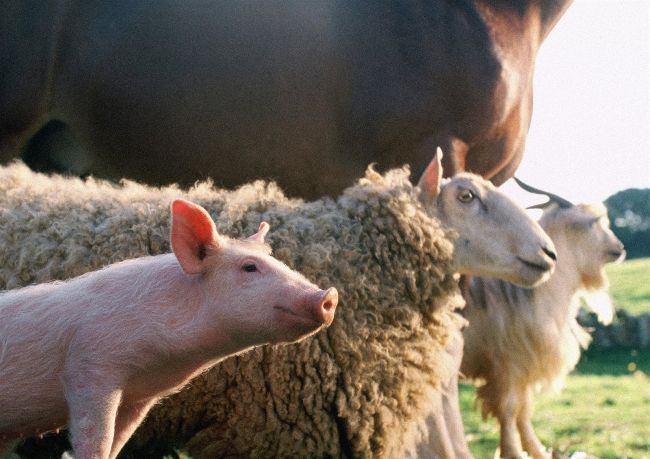
Babe on sheep-pig duty.
It was the (curly) tail end of 1984, and the Australian director had spent the past few months surrounded by oinking farm animals on set of his third Mad Max movie, Beyond Thunderdome. “I’d eat lunch with pigs all around me,” Miller chuckles. “I came to learn how sensitive they are. We bred them for their meat, but we didn’t breed out their intelligence.”
Porkers had played an integral part in Beyond Thunderdome, which saw Max infiltrate an underground refinery that transforms pig poo into methane. But with production wrapped, Miller assumed his days of sharing a call sheet with porcine performers were over. One long-haul flight proved him wrong. “I was somewhere over India, looking down at the campfires on the horizon,” he recalls. “I was flying to London [from Australia] to record the score [for Beyond Thunderdome], and I couldn’t sleep so I was listening to the radio. There was this critic reviewing children’s books. She got to this book called The Sheep-Pig, by Dick King-Smith, and the way she was laughing about this story just made me want to find out more.” Jet lag be damned, Miller found a bookshop the moment he landed in London. “I read it in one night,” he remembers. “My reaction was the same as the critics’. I was delighted.”
More than a decade later, that bleary-eyed binge-read resulted in Babe. The tale of an indefatigably cheery, talking piglet who moonlights as a sheepdog, the movie’s unique blend of storybook charm and weightier themes about farmyard brutality had a seismic effect. When Babe was released in 1995 — earning $254 million against its $30 million budget — it inspired swathes of young people across the globe to become vegetarian (“Someone in [UK] Parliament complained about the effect it was having on the pork industry,” Miller laughs). It also garnered glittering reviews from critics (butchers were presumably less keen), embedded the phrase, “That’ll do, Pig,” in the public consciousness, and bagged the Oscar for Visual Effects, in addition to being nominated for Best Picture, Director and Screenplay — a rare coup for a children’s film.