Q& A YOU ASK, WE ANSWER
1,500 The number of hours needed to complete the notoriously complex 1978 board game, The Campaign for North Africa, the rules for which span three volumes.
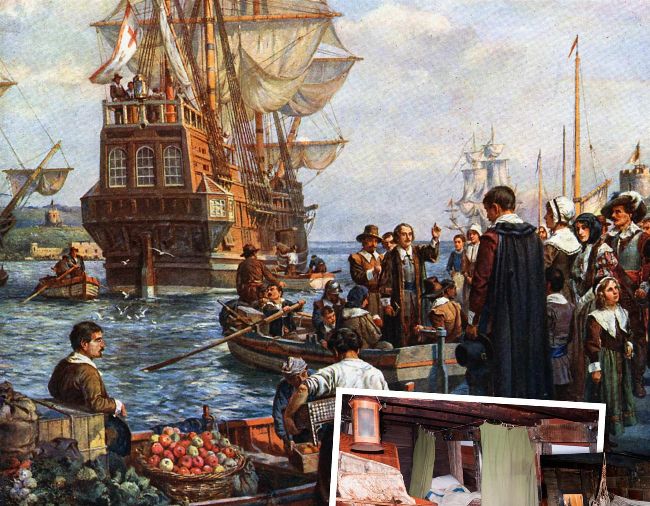
NOT PLAIN SAILING Despite its romantic depiction in this c1754 painting, the Pilgrims’ voyage to the New World was far from glamorous
GETTY IMAGES X1, ALAMY X2
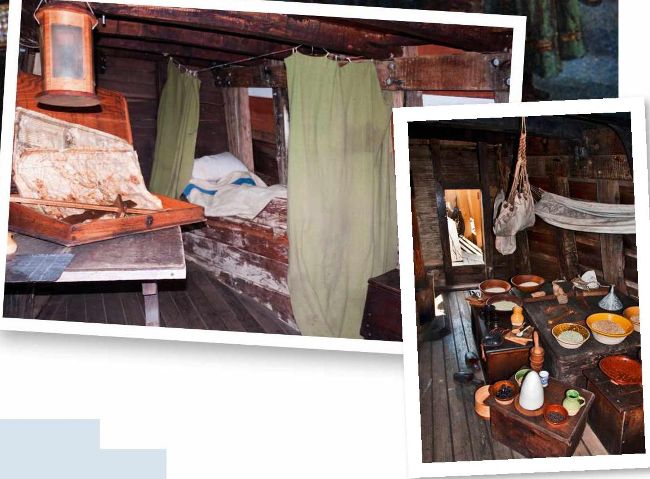
THE SHIP’S (A) MESS A modern replica of the Mayflower, moored in Massachusetts, gives visitors a sense of what it was like to live below deck
What was it like
on the Mayflower?
SHORT ANSWER The voyage was late, crammed, and took double the time – like any standard train journey then, but with added storms
LONG ANSWER No one said seeking a new life in the New World was going to be easy, or if they did, then the voyage on the Mayflower would have shaken sense into them. In fact, things were bad from the outset when the Pilgrims had to wait around to see if their second ship, the Speedwell, was seaworthy. It wasn’t.
So, 102 passengers and up to 30 crew crammed on to the
Mayflower and set sail on 16 September 1620, packed like sardines in quarters not tall enough for anyone over five feet, enduring cold and damp, and living off paltry rations. And the delay with the Speedwell meant the crossing had to be done during stormy season.
Ferocious tempests battered the Mayflower, which was ill-designed to cope with strong waves and winds, meaning everyone got sick. One boy, William Butten, perished and another man was swept overboard, although he was miraculously saved.
In fact, it is surprising there weren’t more deaths during the 66-day voyage – twice as long as it should have been – and, actually, the same number of Pilgrims landed in Massachusetts after a woman named Elizabeth Hopkins gave birth on board the ship. Appropriately, she named the boy Oceanus.
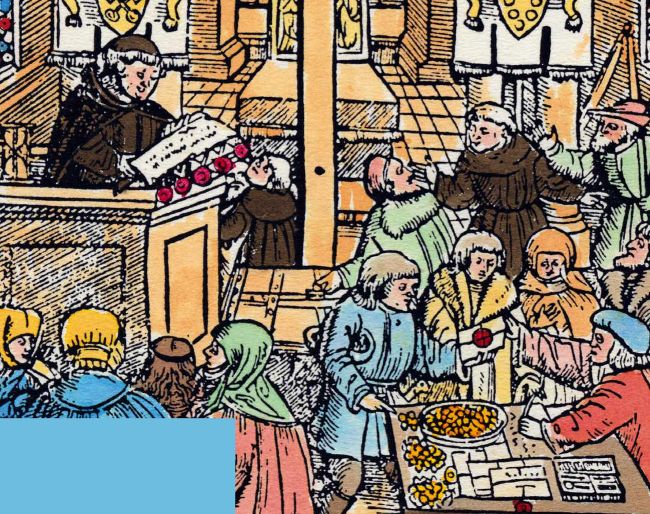
PAYING FOR FORGIVENESS A 16th-century woodcut image shows churchgoers purchasing letters of indulgence
GETTY IMAGES X7, ALAMY X1
5,40 0
The number of individual parts, including every single link in each chain, in H1, John Harrison’s first clock to calculate longitude at sea.
How were indulgences abused?
SHORT ANSWER spiritual salvation for cash
LONG ANSWER In the Roman Catholic Church, The medieval church sold an indulgence is a remission of the punishment of sin. In essence, it is getting time off for good behaviour. Indulgences in their true form take the shape of good works, charity, prayer or pilgrimage, but in medieval Europe they were abused.
From the 11th century, belief in Purgatory – the place in between Heaven and Hell where souls are purified through temporal punishment – intensified, making people somewhat keen to write off their debt of sin. The Church obliged by selling indulgences for money, with the amount given determining how much sin was remitted. The rich could pay for whole churches to ensure salvation or even secure indulgences for someone already dead to reduce their time in Purgatory.