BEEKEEPING Basics
For all new and future beekeepers out there, here are the essential facts about bees, beekeeping and harvesting honey.
BY CHERIE LANGLOIS
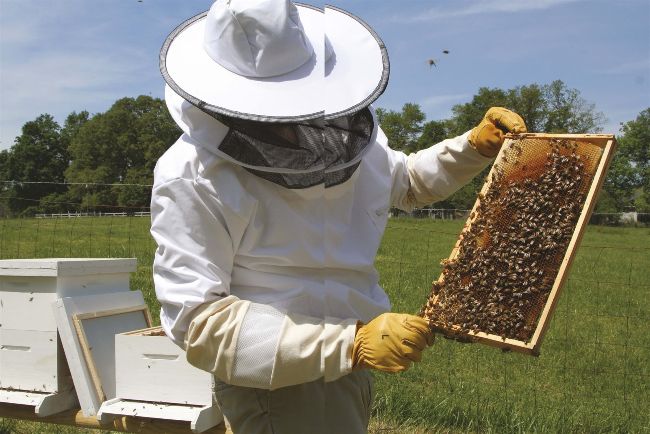
Hive inspections need to be conducted regularly, but not so often that they disrupts the hive’s routine.
TERRIE L. ZELLER/SHUTTERSTOCK
Basic beekeeping doesn’t require huge amounts of money, time or space, and you can keep bees just about any place where flowers bloom. If like to drizzle amber honey on your morning toast or into green tea, you might want to try out beekeeping — also called apiculture.
Our country could certainly use some new beekeepers. According to Troy Fore, executive director of the American Beekeeping Federation, there are an estimated 100,000 hobby beekeepers in the United States, down from 200,000 in the 1970s.
Urbanization has played a role in this decline, along with the spread of parasitic mites that have decreased production and increased beekeeping costs.
“The possibility of being stung, problems with mites, and the labor involved puts potential beekeepers off,” says Jack Robertson, a beekeeper with 25 years experience who keeps 250 hives near Olympia, Washington, with his wife, Virginia.
But small-scale beekeeping doesn’t require huge amounts of money, time or space, and it can be done just about any place where flowers bloom, maintains Howland Blackiston, a Connecticut beekeeper with more than 20 years of experience and author of Beekeeping for Dummies.
A few healthy hives will reward you with pounds of surplus honey to savor yourself, bestow on neighbors or sell at your local farmer’s market. As they forage in your garden, the bees will also perform the essential job of pollination — the transfer of pollen that allows plants to reproduce.
“I’ve witnessed the miracle in my own garden: more and bigger flowers, fruits and vegetables,” says Blackiston, adding that many gardeners report seeing fewer honeybees these days. “Millions of colonies of feral honeybees have been wiped out by urbanization, pesticides and parasitic mites. Backyard beekeeping has become vital in our efforts to establish lost colonies and offset the natural decrease in pollination by wild bees.”
STING PLAN
If you do get stung by a bee, remove the stinger by scraping it out with your fingernail so you avoid squeezing more venom into your skin. Puff smoke on the site to cover the alarm pheromone that may attract other bees. (Workers only sting once and the one that got you will soon die.) Wash and dry the area and apply an ice pack. Antihistamines can help ease swelling and itching. If you’re stung on the mouth or throat, experience swelling in these areas, difficulty breathing or signs of shock, call 911. To be on the safe side, keep an EpiPen emergency sting kit — available by prescription — on hand in case a guest has a severe allergic reaction.