Buying BEES
Happy, healthy honeybees of good survivor stock are crucial to a new hive’s success.
BY KRISTINA MERCEDES URQUHART
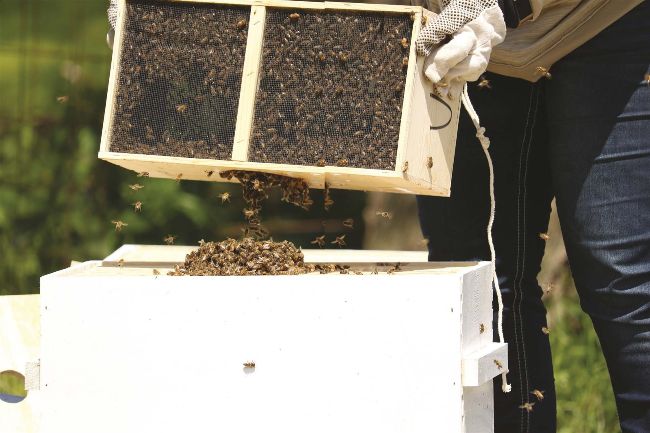
DONETTE KOELZER/SHUTTERSTOCK
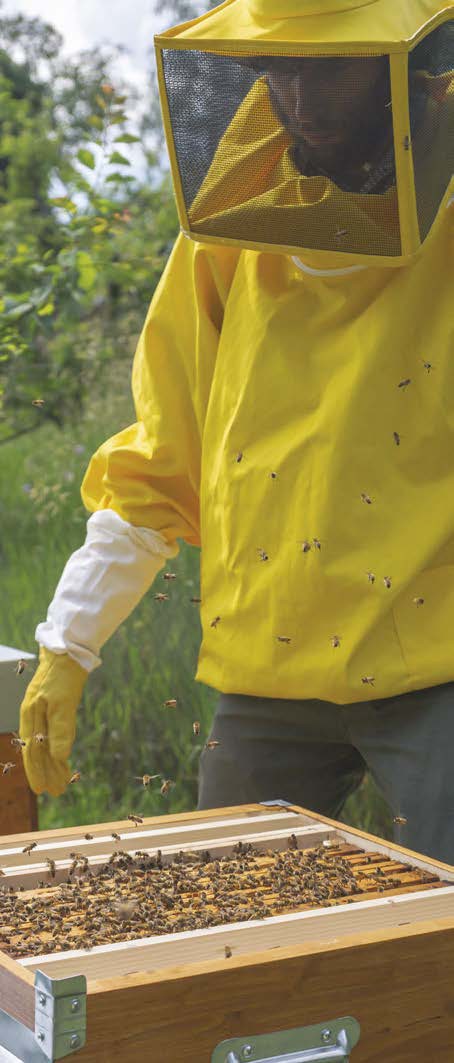
A beekeeper in yellow work wear starts the inspection of the brood chamber to evaluate the health and strength of the Carniolan honeybee colony.
MARINAGREEN/SHUTTERSTOCK
Each winter, beekeepers across the country place early orders for their bees. They choose either a nucleus colony (called a “nuc”) or a package of bees. These starter hives are in such high demand that reservations fill up quickly from the most reputable breeders. But how does a beginning beekeeper know who to buy from? And what should you expect when buying bees?
As a beginning beekeeper, starting with healthy bees of the right breed is crucial. Any beekeeper will tell you that genetics are essential to success. Several breeds of bees produce honey, and they’re bred for docility as well as honey production. Good genetics means your bees will start off right; they’ve been bred to be healthy and hardy, and to fight varroa mites. Finding bees with good “survivor stock” genetics means the bees will overwinter year to year in your region with success and vigor.
HOW DO YOU FIND SUCH HEALTHY, HAPPY BEES?
When buying bees, check your area for bee breeders and apiaries that make early spring splits and sell nucleus colonies. For beginners, “nucs” are the easiest option.
You might pay a bit more for a nuc, but it will come established: A nucleus colony has a mated queen, already laying, on three to five frames of brood in various stages of development. You need only to move the bees and frames into the hive you’ll have and monitor their growth.