Hive Mind
As a beginning beekeeper, you can choose from several hive design.
BY LESLIE J. WYATT & KRISTINA MERCEDES URQUHART
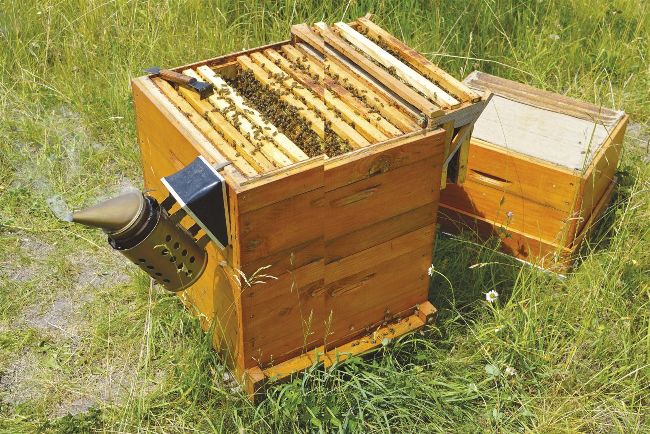
Langstroth hives are the most common hives used in North America.
SOBOLEVSKYI_VADYM/SHUTTERSTOCK
When we decide to keep bees, we do so knowing bees are essential for good pollination, and of course, we love the honey they produce. What sometimes isn’t clear, though, is what type of hive will suit us best. This decision depends on factors that vary among beekeepers. To help you make the right choice for you and your farm, here are three hive options to consider.
LANGSTROTH HIVE
This ubiquitous “bee box” is the most popular option for modern beekeepers. It was invented by Lorenzo Langstroth, a Massachusetts minister and beekeeping hobbyist in 1851, and it was the first hive to contain removable frames, which allowed beekeepers easier access to the hive for bee inspections. A Langstroth hive consists of a bottom board, one or two deep supers (18¼-by-14¼-by-9½ inches), one or two honey supers, an inner cover, an outer cover and the frames.
LANGSTROTH: PROS VS. CONS
This is the most common hive, composed of rectangular boxes filled with frames of comb that are stacked upon each other.
PROS
• It has the potential for high honey yield/production.
• Obtaining information and help on hive care and management is easy.
• Honey can be moved one frame at a time, but there is also the option to move whole boxes at a time, increasing speed of inspections.
CONS
• They can be fairly expensive, $125 to $300 and up.
• They’re not easy to build yourself.
ADVANTAGES Easy Harvesting:
The advantages of a Langstroth hive are numerous, but honey collection tops the list. Langstroth hives make it easier for beekeepers to assess honey supplies and remove the desired frames, and the honeyharvesting equipment is readily available.
Standardized Equipment:
You can take brood and honey frames from a strong hive and share it with a weaker hive, because for the most part, components are standard in size and shape. This also means you can find replacement parts when needed, and there is a plethora of equipment and tools available.
Movability:
Compared to a top-bar hive or a Warré hive, a Langstroth hive is easier to move because the components can be disassembled and restacked.
Production:
Langstroth hives are designed to minimize drone production and maximize honey and brood. Langstroth hives are a good choice if you’re into rearing queens or collecting propolis and pollen.