Inspecting the Hive
Hive inspections are a necessary part of beekeeping.
BY KRISTINA MERCEDES
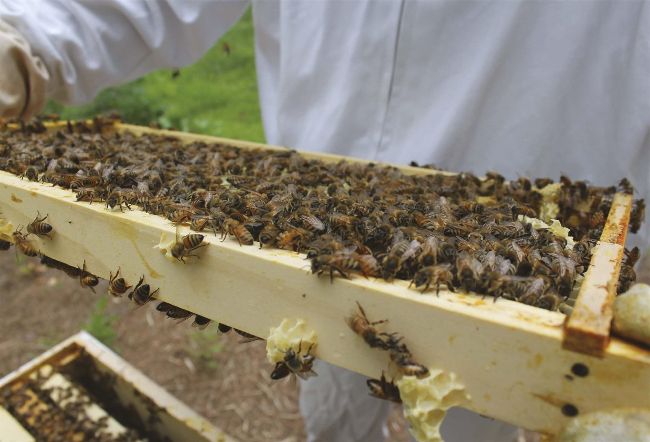
URQUHART
When it’s nearly spring, it’s time to get into the beehives. Your hives are either brand-new, requiring installation and monitoring, or they’re just coming out of winter and require some general upkeep, more space and, well, monitoring. In bee talk, we call such an event a “hive inspection.” The phrase describes the process of checking on your bees within the hive. It’s a critical part of beekeeping, and you simply can’t be a beekeeper without doing this one task.
If you don’t conduct hive inspections, you run the risk of becoming what my mentor used to call a “bee-haver” as opposed to a “beekeeper.” Let’s jump right in!
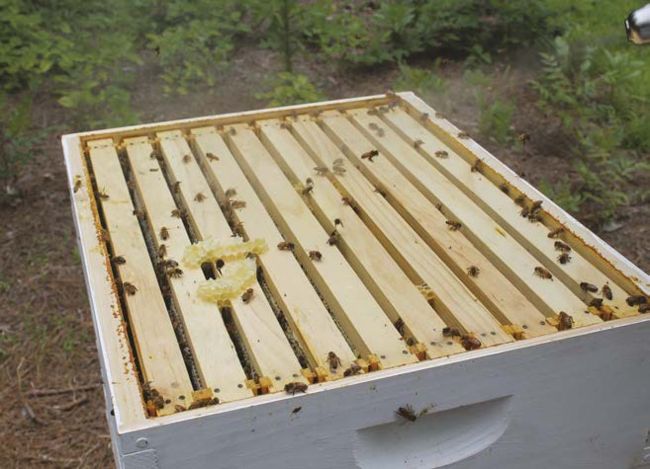
Smoke helps the beekeeper to control the defensive reaction of the bees. It inhibits the normal pheromone communication.
HOW OFTEN SHOULD I PERFORM AN INSPECTION?
This is a great question, and there’s no single answer. Quite simply, there’s no consensus on how often to conduct an inspection on your hive.
In the summer, most beekeepers inspect once a week or once every two weeks. In the winter, most beekeepers go months without an inspection because it’s too cold, and exposing the bees to temperatures below 55 degrees Fahrenheit could be deadly.
WHAT DO I LOOK FOR WHEN I INSPECT MY HIVE?
Hive inspections are always an assessment for levels of health and disease. First, you want to establish that you have a healthy, laying queen, who is able to lay eggs and is actively doing so. Look for signs of healthy brood pattern, eggs and larvae in all stages of development. Also during inspection search the hive for pests and signs of disease.