20 SPOOKY
EXPLANATIONS FOR THE WORLD’S CREEPIEST CURIOSITIES
WHY DO WE GET GOOSEBUMPS WHEN WE’RE SCARED?
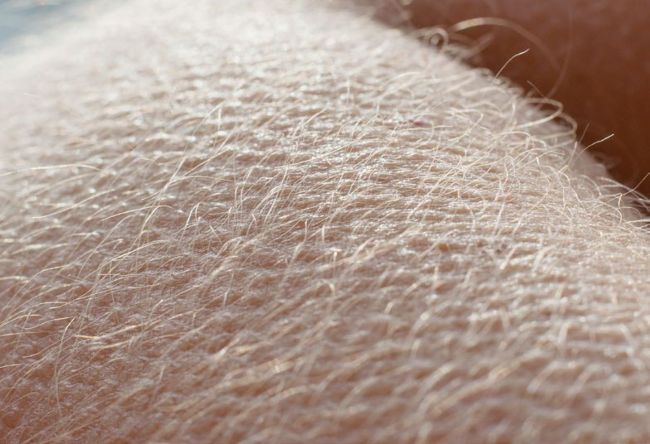
Goosebumps can also help to prevent the loss of heat when we feel cold
Sitting at home, alone and in the dark, a sudden sense of fear and a swift chill may wash over your body. Sure enough, your hairs stand to attention and goosebumps cover your skin. It’s a sensation we’ve all felt at one time or another, but why does our body react in this way when we’re scared? It harkens back to a time when ancient humans faced the daily fear of life-threatening predators. As a result our bodies evolved what we now call a fight-or-flight response. This is a stress response which triggers a release of adrenaline, causing our heart race to rush, our palms to sweat and goosebumps to appear. During this state of fight or flight, the tiny muscles adjacent to each hair contract, making hairs stand on end. Today humans are relatively hairless compared to our animal ancestors. Charles Darwin postulated that at one point in time our ancestors would have been a great deal hairier, and goosebumps would have puffed out their hair to make them look bigger and appear more intimidating to potential predators.
Dissecting goosebumps
How our hairs stand on end when we’re scared
HOW DO YOU KNOW WHEN SOMEONE IS WATCHING YOU?
Do you ever get a nagging feeling that someone is staring at you? Is it really possible for us to have a six sense of when we’re being watched? Studies have found that a single brain cell fires signals when someone looks at us, stopping when their gaze moves away. This was put to the test in 2013 on a patient with cortical blindness. The patient’s visual cortex in the brain was damaged, but the brain still received information from the eyes. What was interesting was that the region of the brain that responds to potential threats, called the amygdala, became active when someone stared at the patient. This innate six sense most likely evolved in ancestral humans as a way to detect when a predator was nearby, giving them the chance to escape.

Ever get that feeling you’re being watched?
© Getty
IS MIND-READING POSSIBLE?
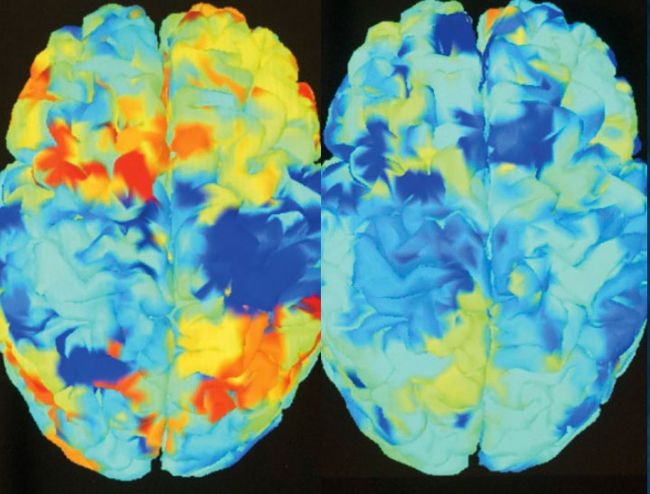
Brain patterns were observed using a functional magnetic resonance imaging (fMRI) machine
© Getty
Our thoughts are our most private and personal belongings, and the idea that someone could go snooping around inside our heads is terrifying. However, the technology to do so is being developed. Besides the moral and ethical hurdles of mind-reading, the brain is an extremely complex organ. Taking it one step at a time, researchers have been analysing the electrical patterns we produce in the brain when we think of something, such as an object, number or even a sentence. The researchers can then identify and decipher distinct patterns associated with those thoughts in the hope of building a neural dictionary of patterns.