THE ORIGINS OF WEIGHTS AND MEASURES
Why did much of the world switch from the imperial to the metric system?
WORDS SCOTT DUTFIELD
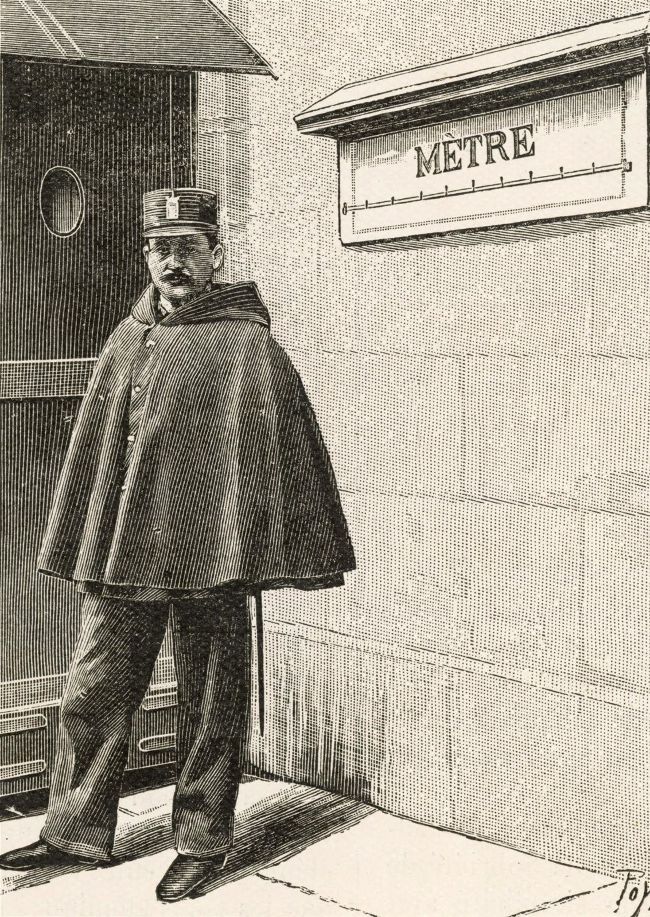
An illustration of a standard metre hanging in the Petit Luxembourg, Paris, in 1799, following the end of the French Revolution
Since civilisation began, humans have created ways to measure and standardise units of measurement for things. Typically for trade and agriculture, early measures in Mesopotamia – what is mostly Iraq today – utilised parts of the human body, seeds and stones to create standards of measure. Up until 1700 BCE, the people of the Harappan civilisation in Punjab, India, created intricate weighing scales and developed measurements such as the ‘Indus inch’, which is equal to 1.32 inches. Ten of these equalled a ‘foot’, although it’s unclear whether or not the Harappa people had such big feet.
The first standardised system of units is believed to have originated in Great Britain and is known as the imperial system. However, this collection of units of measurement evolved from thousands of years of Roman and Anglo-Saxon influence – that is, ancient Italy and ancient England. For example, the Anglo-Saxons used a unit of length known as a barleycorn, which has now been standardised to 8.5 millimetres, that’s still in use today to measure shoe size. The imperial system was formally standardised and