BRAINDUMP
Amazing answers to your curious questions
What is the world’s tallest waterfall?
The two top contenders are Angel Falls in Venezuela and Tugela Falls in South Africa, but which one claims the title depends on the criteria. The debate is whether to award the title to the tallest single drop or to the tallest sequence of falls. Angel Falls easily wins the tallest drop contest with a breathtaking 807-metre cascade. But Tugela Falls is a series of five waterfalls in quick succession that taken together drop a total 948 metres.
When Angel Falls was originally measured in 1949, the American expedition included a second 30-metre plunge farther downstream. If you include the sloping rapids between these two falls, the total drop in elevation is 979 metres.
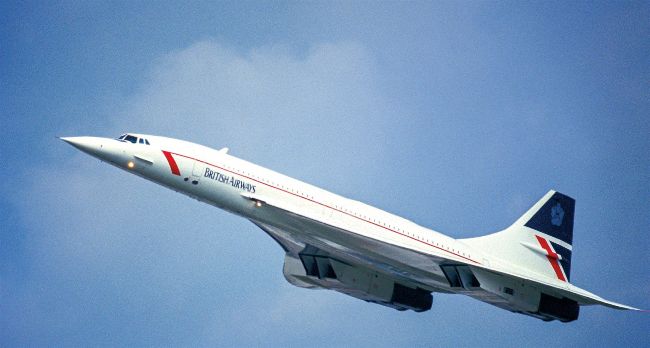
COULD ACONCORDE HAVE PULLED OFF ABARREL ROLL?
A barrel roll is a manoeuvre whereby an aeroplane makes a complete corkscrew-like rotation around its horizontal line of travel while maintaining a roughly constant direction. An important consideration before performing any type of aerial acrobatics is the amount of g-force that will be exerted on the aircraft. G-force isn’t strictly a force – it’s a measure of acceleration per unit of mass, with one unit of g taking the value of 9.8 metres per square second per kilogram of mass – the same acceleration produced by gravity at Earth’s surface. When going around a tight corner in a car, you can feel the g-force pushing you sideways. The Concorde – like most commercial aircraft – was built to withstand around 2.5 g. Barrel rolls exert approximately 1.0 to 1.5 g on an aeroplane when done correctly. Pilots Jean Franchi and Brian Walpole reportedly performed barrel rolls in a Concorde during test flights, but never with passengers on board.
WHY DO RADIO WAVES TRAVEL AT THE SPEED OF LIGHT AND NOT SOUND?
Radio waves are a form of electromagnetic radiation – the same phenomenon as light, X-rays and various other types of radiation, but with much longer wavelengths. As such, they travel at the speed of light – which is 186,000 miles per second – a lot faster than the 340 metres per second that sound itself moves through the air. It’s easy to be fooled by the fact that when you hear the word ‘radio’, you usually think of voices or music, but radio waves aren’t sounds themselves – just the medium used to broadcast an electronic signal from the studio to your device, which the speaker then turns back into the vibrations in the air that we can hear.