HOW PC DRIVES EVOLVED
Modern computer drives can store the equivalent of hundreds of high-resolution movies over a century since their humble origins
WORDS BEN BIGGS
When do you think the first data storage device was invented? Maybe around 50 years ago, alongside the first personal computers? Or 80 years ago, around the time the first transistor was invented? It’s much earlier than that: US inventor Herman Hollerith popularised the first machine data storage medium in 1890, when it was used to help process data in the US census that year. Punched cards were composed of round holes in pieces of machinereadable cards, punched in precise places that corresponded to a data point. These data cards were fed into Hollerith’s electric-powered punched card tabular, which would rapidly calculate and tally all the data. In the case of the 1890 US census, this included categories such as the age, gender, and number of people in a household. Hollerith’s invention helped reduce the time it took to process census data from eight years to six years, even though punched cards weren’t used for all parts of the census.
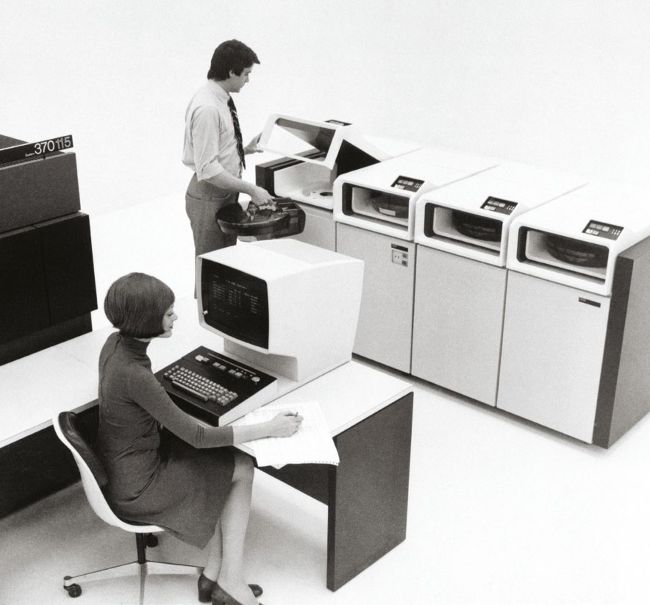
The IBM System/370 Model 115 launched in 1973. Up to four drives could be attached for a total storage capacity of 280 megabytes
Did you know?
The Apollo 11 guidance computer had a 32-kilobyte hard disk
In the following decade, the punched card tabulator was licensed to other countries for their own censuses. And over the next 70 years, many other industries benefited from his machine, where the automated process of calculating huge amounts of data on reams of punched cards, as opposed to the tediously slow hand-counting of yesteryear, saved weeks of working hours and millions of dollars.