MEET YOUR INNER BEASTS
From intestinal worms to the protozoa that cause malaria, our bodies can play host to some unwelcome visitors
WORDSSARAH DITUM
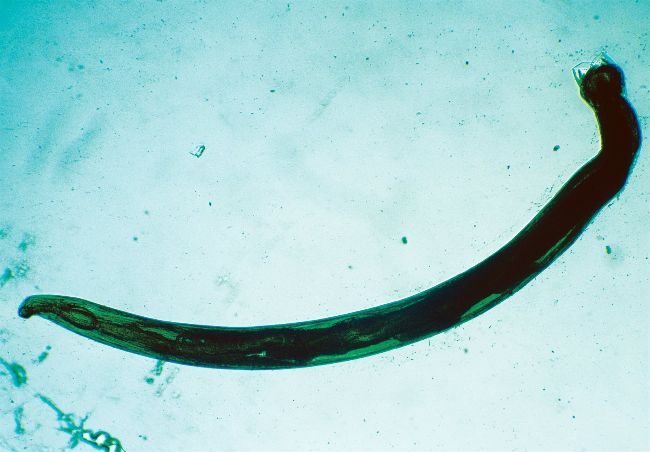
GETTING HOOKED Hookworms are usually contracted when a human steps on contaminated soil. The worms enter the skin and then travel through the blood to the lungs, then the throat. Once swallowed, they infect the gut. They can be caught from pets if infected faeces are stepped on.
Archaeological evidence shows that the human body has been host to numerous tiny invaders for practically as long as there have been human bodies, and the millennia that have passed since have not made us feel much affection for these unwanted passengers in our guts.
Take intestinal worms. We find them disgusting. For the most part, we’re right to do so. As they draw nutrients from our bodies and exploit our behaviour to further their life cycles, these parasites can cause malnutrition and debilitating pain, and can also introduce secondary infections that are sometimes fatal. But we are also learning that our relationship with intestinal worms is not as one-sided as once thought, and some researchers believe that eliminating them from our bodies has brought us new harms.
Did you know?
Botfly larvae can be easily removed with nail varnish or petroleum jelly
Most parasitic worms make their way into the human body through the obvious entrance – the mouth. The threadworm is a small, slender worm that takes its name from its mature form’s similarity to short lengths of white cotton. It has an ingenious and unpleasant method of getting its eggs inside you. After maturing inside the host’s intestine, the fertilised female migrates down the intestinal tract to lay her eggs around the host’s anus. Along with the eggs, the threadworm also deposits a sticky mucus that causes intense itching. The itching is key to transmission, because it causes the host to scratch, temporarily alleviating discomfort but also collecting eggs under the fingernails. Careful washing is sufficient to get rid of these, which is why threadworms are most prevalent among small children who have yet to acquire good personal hygiene. Once they have been transferred from the host’s fingers to another surface, the eggs stick until something else picks them up, ideally – from the threadworm’s point of view – another human host who will swallow the eggs and begin the cycle again. The eggs are even capable of surviving outside the body for two to three weeks.