A burning issue?
by Zoe Weir
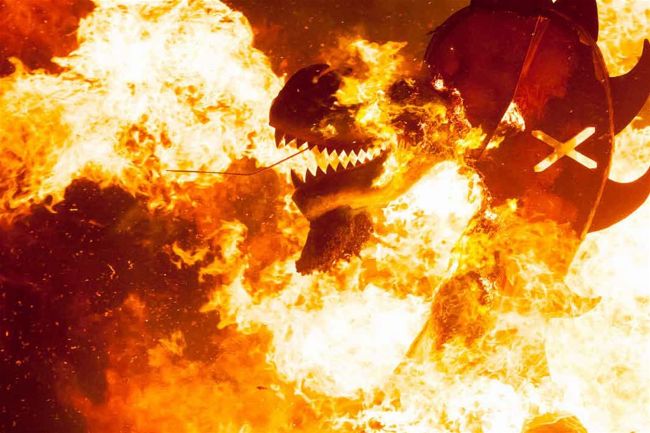
iScot examines Up Helly Aa’s evolution from Victorian hellraiser to Viking wannabe, and finds locals have an axe to grind…
Photos by Iain McLaren
Shetlanders do not like being put in a box. Not by cartologists, who tend to squeeze the Northern Isles into a peerie (1) square just off Scotland, when it is actually closer to Norway. Not by historians, who still debate whether Vikings wiped out Shetland’s Pictish natives or assimilated them. Not by political pundits, for Shetland is a law unto itself; and never more so than during their annual fire festival, Up Helly Aa. This unique spectacle claims Viking connections, but in truth was forged in Victorian times; to this day it retains a “no-women” rule hotly debated by islanders.
Scotland’s rich Viking legacy is nowhere more visible than in the Northern Isles, which were under Norse rule between the 9th and 15th centuries. 29.2% of Shetland’s men have some Viking DNA; the Old Norn language, descended from the Norse tongue, still dominates the place names, surnames and local dialect. Remnants of Viking structures are dotted around the island; experts believe more sit unmarked beneath the peaty soil.
Yet Up Helly Aa’s story begins much later,after the Napoleonic wars (1803-1815). Young soldiers, returning from gun powder-charged battles, craved adrenaline-fuelled release, and Yule celebrations grew ever more riotous. By 1840, the holiday“extreme sport” of choice involved young men careering up and down narrow streets dragging barrels of blazing tar on home-made bogies. Teams raced against each other, a barrel apiece, leaving a trail of collateral damage that left property smoking and villagers fuming. Tolerant townsfolk would then open their homes to the young men who, after a quick scrub down, would turn up in squads, dressed in homemade disguises, to eat,drink and be merry. Each squad would perform a skit of low farce or political satire, and paired dancing with local lassies would follow. Shetland’s“guizing” dates back to medieval “skeklers”; crofters dressed in costumes of straw.