MADE IN CHINA
From its eastern origins in ancient China, pak choi has become popular in the UK kitchen, used in stir-fries, soups and salads. Rob Smith offers some top tips on how to grow these tasty leaves
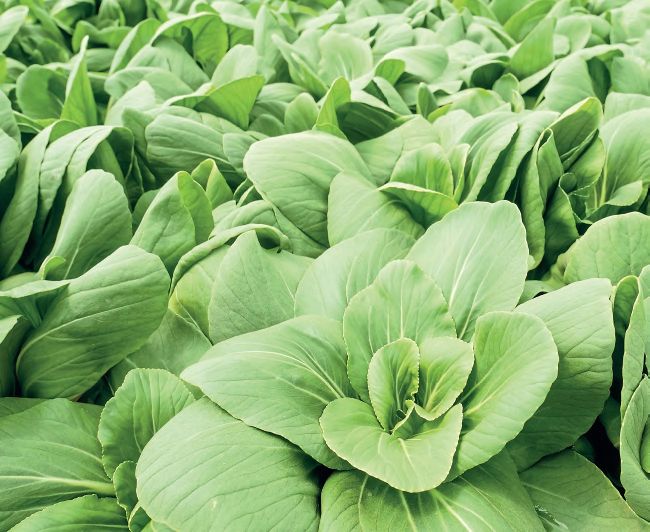
The leaves of larger plants can be shredded and added to stir-fries
Pak choi is a vegetable with multiple different names. Pak choy, bai cai, bok choy and Chinese white cabbage – they are all the same vegetable and come from the Cantonese translation meaning ‘white vegetable’ because of the pure white stems.
It’s rare that you can go out for Chinese food without having this vegetable make a guest appearance at some stage during the meal, be it shredded or stir-fried whole. I know that when I used to travel to China a lot, this member of the brassica family used to be a firm favourite when it was served as a baby vegetable in soups with lots of chilli and noodles.
A LONG JOURNEY
Pak choi has been grown in Asia for centuries – in fact there were excavations in the Yellow River Valley in China where they found what is thought to be pak choi seeds and they were more than 6000 years old.This has to make it one of the oldest cultivated vegetables in the world, predating beetroot, which is known to have been grown in Egypt around 1343BC when King Tut was alive! Even though it has been around for thousands of years, it wasn’t until the 19th century that pak choi arrived in western kitchens after making its way to the US with Chinese immigrants, and finally making it into seed catalogues around 1880.