’QUICK RETURN’ COMPOSTING –DEVELOPMENTS AND ADAPT ATIONS
Following on from last month’s article on Quick Return (QR) composting, Andrew Davenport explains how the QR method and its powerful herbal activator have been developed and adapted
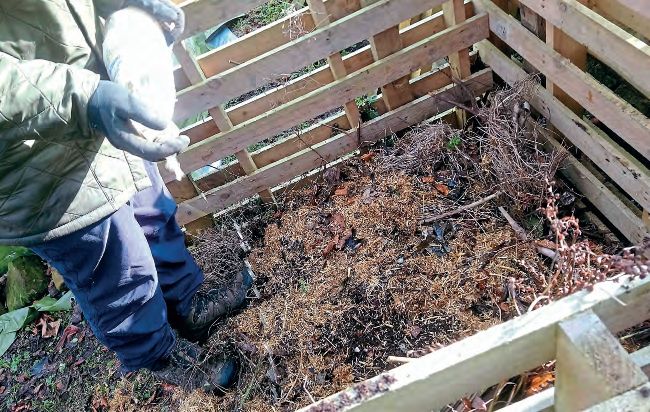
Cold composting can be speeded up with QR
Some of the developments in QR composting are from the original work by Maye Bruce (the inventor of the method back in the 1930s), some are developments from my own experimentation and some are useful discoveries by a group of Benedictine nuns in Germany.
AN ADAPTED DALEK BIN
Miss Bruce latched on to the concept that if you can retain the heat generated by the bacteria in the heap, then this would increase the speed of decomposition. She would use sacking or carpet on top of the heap as insulation. So insulating a compost bin is a sound idea as long as you don’t cut off air to the decomposing material within since the beneficial aerobic organisms we want to encourage require air for their bodily processes. With the advent of plastics came the plastic cone-shaped compost bins I refer to as ‘Daleks’. They are ideal for composting kitchen waste. ‘Daleks’ can be adapted by applying waterproof insulation to the outside of the bin. Not only will this make compost more quickly, it will enable compost to be made all year round.The easiest way is to wrap bubble wrap around the to form a nice thick layer – 10cm (4in) is a good depth which will make quite a difference to the insulating properties of the bin.
The lower portion of the bin where the hatch is located should not be covered so access to finished compost is not compromised. Applying insulation to the upper two-thirds only means the bin becomes divided into two zones.The upper zone becomes a ‘hot zone’ whereby the waste material undergoes a heating phase allowing thermophilic (heat loving) bacteria to do most of the work.The lower part with no insulation becomes a ‘cool zone’ where fungi and other organisms including worms can work within their ideal temperature range. Compost needs to go through a cooling phase to ensure that nitrogen-fixing bacteria and other organisms can play their role in making fertile compost.