Querying your 3D stack
Intel’s numbering systems make no sense, but whatever your card there’s plenty of demos to play with…
F or a long time, users of middle-aged Intel hardware were stuck using the venerable i965 Mesa driver. This caters to a range of hardware, from Broadwater (2006) to the HD and Iris graphics found in some Skylake chips (2015). For older hardware there’s the i915 Mesa driver, not that such hardware had much in the way of 3D capability.
Newer, so-called Gen8 graphics and above (from Broadwell through to the latest Xe graphics) is supported by the Iris Gallium3D driver.
The i965 (and i915) driver dates back to before the Gallium framework was developed, and throughout last year there were calls to retire it. However, Mesa aren’t in the habit of mass-scale hardware abandonment, so until a replacement was finalised, i965, and other ‘classic’ Mesa drivers were granted a reprieve.
That replacement driver goes by the name of Crocus and it’s ready for prime time. So the classic Mesa drivers were deprecated (more precisely demoted to ‘amber’ status, like the preserved bugs in Jurassic Park) in December 2021. If you’re running the latest Fedora, Ubuntu or a rolling release distro (on appropriate hardware) then you will already be using Crocus.
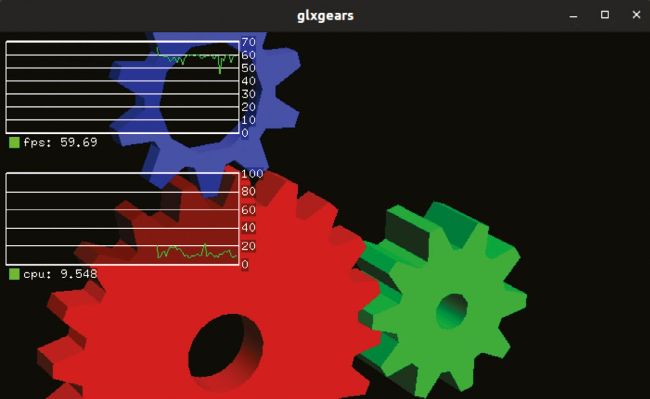
Glxgears looks much better overlaid with graphs from the Gallium HUD.
What’s in a name?
First though, let’s clear up Intel’s slightly awkward generational naming. Intel’s seventh-generation processors (codename Kaby Lake, part of the Sky Lake microarchitecture) include the four-core 7700HQ desktop CPU and the mobile 7500U. That all seems consistent, everything begins with 7. However, some Kaby Lake processors sport Iris Plus 630 or 640 graphics, and some feature the lesser HD 6x0 technology. So not only is there a numerical discrepancy, but at first glance it would seem that the Mesa Iris driver (explicitly described as for Gen8 and later) shouldn’t be used in (some) Kaby Lake systems. Except that’s not right – the Iris driver caters to this generation of Intel graphics, too. In fact, it caters to one generation before that. So the iris driver actually caters to some non-Iris chips, and Gen9 graphics are actually found in processors marketed as 7th Gen. Even Intel aren’t immune from off-by-one errors, it would seem.