Amasing Crace
When Edmond Karban fell out with Negură Bunget bandmate Negru, he couldn’t have imagined the two would never get the chance to make up. Now, with Dordeduh, Edmond is seeking peace with his past
WORDS: JONATHAN SELZER
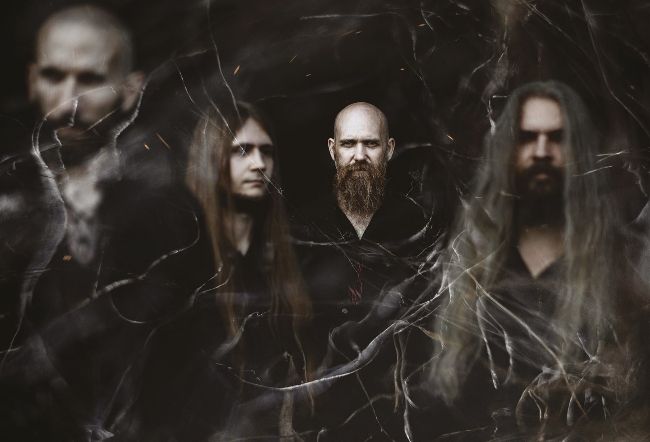
PICTURES: ALEXANDRU MOGA
"I should not be making music anymore,” says Dordeduh frontman Edmond ‘Hupogrammos’ Karban. “I’ve had my time. I’ve played the greatest festivals in Europe, I was in Romania’s first black metal band, and the first metal band from the country to sign to an international label. I could easily lay down my guitar and say I did my thing. And yet this is an album that I still felt I had to make.”
Edmond is speaking from his new home in the verdant hills of Banat, two hours south of his birthplace, Timişoara, in the Romanian, muchfabled region of Transylvania. He’s reflecting on both the career-wrecking effects of the pandemic – he was a studio and live engineer until COVID-19 broke out – and a devout, revelatory and often turbulent 27-year musical journey that put his home country on the metal map while forever altering the black metal landscape in its wake.
As songwriter and co-founder of black metal visionaries Negurăă Bunget, his exploration of native folklore and spirituality took him from the most underground of beginnings to helming a revered, ever-evolving entity that reached its zenith with their fourth full-length, 2006’s Om. Utilising traditional instrumentation such as the tulnic alphorn, the nai pan flute and the toacăă –a hammered wooden block hung from a frame, once used as a call to prayer – it was an album of fierce and otherworldly wonder that resonated on the most rarefied yet primordial of levels. It’s regularly cited as one of the greatest black metal albums ever made.