UNIVERSAL MONSTERS
As Metallica rolled into the new millennium, the band were at breaking point. Cue two filmmakers, a therapist and one of the most fascinating music documentaries ever made
WORDS: ELEANOR GOODMAN
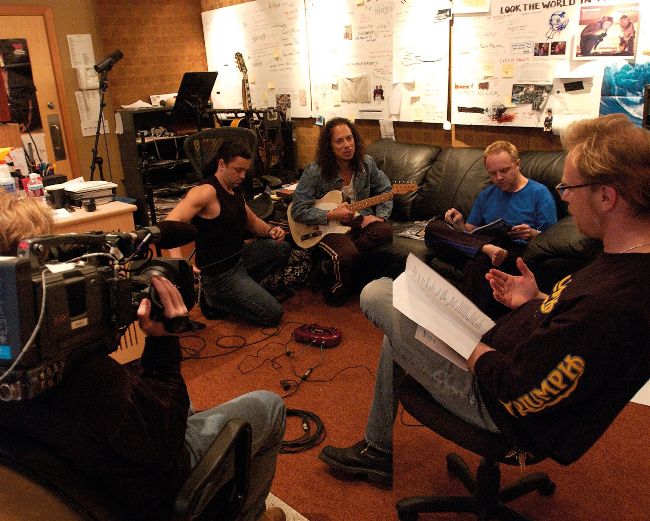
Director of Photography Bob Richman with the guys at Metallica’s headquarters/ studio during the recording of St. Anger
PHOTO(S) COURTESY THIRD EYE MOTION PICTURE CO., INC. ALL RIGHTS RESERVED. ANNAMARIA DISANTO.
FUUUUCK!” Lars Ulrich screams into James Hetfield’s face, but the frontman doesn’t flinch. It’s an extraordinary moment in the documentary Metallica: Some Kind Of Monster, as the tension that’s been ratcheting up between the pair for decades comes to a shocking climax.
For co-director Joe Berlinger, it was also a scene of great cinematic merit. “From a filmmaking point of view, when your intention is to capture raw human emotion, it was pure gold,” he says.
Some Kind Of Monster was an intimate portrait of a band working through an interpersonal crisis that had been bubbling under the surface long before the cameras started rolling. By early 2001, Metallica’s management company, Q Prime, were aware of fracturing relationships in the band, and had drafted in psychotherapist and ‘performance enhancement coach’ Phil Towle, to help ease relations as they prepared to make their eighth record. His first meeting with Metallica took place at the Ritz-Carlton hotel in San Francisco, but the smooth introduction he had intended on making did not go as planned.
“Jason came in and said: ‘I’m leaving’,” remembers Phil. “He asked me to go to the room adjacent, where I listened to him railing against the bandmates for 10 minutes. And that was chaos. I decided at some point to knock on the door and say, ‘May I come back in? This is exactly why I’m here.’ And Lars said, ‘Let him stay.’ And we started the process, which was an awkward, challenging moment.”