FILTER REISSUES
The good place
From the bayou to Woodstock and back – the easygoing adventures of Bobby Charles. By John Mulvey.
Bobby Charles
★★★★
Last Train To Memphis
LAST MUSIC COMPANY. CD/DL/LP
BOBBY CHARLES can sometimes seem a musical equivalent of those elusive, mythical figures who reappear time and again at critical inflection points in history. He was there at Chess Records in Chicago 1955, at the dawn of rock’n’roll. In New Orleans, building the city’s R&B foundations with Fats Domino. In Woodstock, consorting with The Band. At The Last Waltz, singing Down South In New Orleans with Dr. John. In Florida, rolling joints for Neil Young at the Oceanside Countryside sessions in 1977 – “Playing the part of the Wizard,” remembered Young. A songwriting genius who couldn’t play a note on any instrument. And a man with the best connections in the business, who left it all behind to take it easy in the Louisiana backwoods.
There’s a song on Charles’s first solo album, recorded with The Band, Dr. John and various other luminaries in 1972, called I Must Be In A Good Place Now. In it, Charles responds to the end of a relationship in languid, beatific terms, and turns his mind to the consolations of a mellower life. “What a good day to go fishing,” he sings, in a voice that’s soulful in the most understated way, “and catch the sunset in the hills.” It works pretty neatly as a mission statement for what Charles did after that beautiful solo album stiffed, and he fell out with his Bearsville label boss (and Dylan manager) Albert Grossman; one rumour – amplified by Charles himself – was that Grossman’s wife Sally “had a thing” for him. From 1974 until his death in 2010, it’s not hard to assume Charles had simply gone fishing.
The songs collected on Last Train To Memphis, however, tell a slightly different story, one in which Charles continued to make records and retained his astounding contacts, but at an even further remove from the mainstream. Here, Fats Domino and Clarence ‘Frogman’ Henry exist on the same album as Neil Young and Willie Nelson, and Charles’s unostentatious creekside jams are left to mature at their own speed, in a place where he can “fish all my blues away”.
That place was Abbeville, 150 miles from New Orleans, where Charles was born Robert Charles Guidry to a Cajun French-speaking family in 1938. In 1955, the 17-year-old wrote and recorded a rackety, insistent R&B tune called See You Later, Alligator and was signed to Chess, who assumed the singer was black. The single was not a hit, but Bill Haley’s version soon was, and Charles’s subsequent attempts to cash in – Take It Easy, Greasy! Watch It Sprocket! – also flopped.
“Bobby Charles was a songwriting genius who couldn’t play a note on any instrument.”
Still, his songwriting bona fides continued to rise, even though he had to sing his tunes to clients rather than play them; an attempt by Chuck Berry to teach him guitar also ended in failure. The hits came for other people – notably Domino’s Walking To New Orleans in 1960 – before a marijuana bust in Nashville resulted in him going on the run and fetching up in Woodstock, apparently by accident, at the exact time it was also sheltering the American rock elite. 1972’s Bobby Charles became emblematic of the scene’s collegial good vibes, a horizontally funky masterpiece packed with fine musicians and finer songs (Paul Weller covered one of the best, Small Town Talk, on this year’s Find El Dorado). It was not, though, anything resembling a commercial success, and within two years Charles was back in Louisiana. He would not release another record until 1987.
What followed was a series of overlooked albums, on his own Rice’n’Gravy label, that quietly pursued the musical template he’d established in 1972: Southern-accented blues and country-tinged grooves, a sort of Louisiana analogue to JJ Cale’s ultra-casual Tulsa Sound. Last Train To Memphis is the fourth of these albums, from 2004, its title borrowed from Peter Guralnick’s Elvis biography. Like its predecessors, time and newness are hazy concepts here: recordings date from the ’70s and ’80s as well as the turn of the millennium. Everyday, from 1975, is a match for any of the songs on Bobby Charles, with a crack Nashville crew – Eddie Hinton, Norbert Putnam, Stray Gators’ Ben Keith and Kenny Buttrey – stepping in for the Woodstock all-stars. A 1984 session in Austin, meanwhile, produces Full Moon On The Bayou, an endearingly hokey Cajun jaunt that features both Neil Young and Willie Nelson on acoustics, plus harmonies from old Woodstock pal Maria Muldaur.
Even the bad times sound good in Charles’s amiable hands. “I’m sitting here drinking again/Passing the time with my friends,” he laments on What Are We Doing, another gorgeous break-up slouch from 1998 that he’d first recorded in 1974 (you can find that version on Bearsville Studio Sessions, a 2025 Record Store Day gem). There’s a little more grain in his voice on these late-’90s cuts, and Sonny Landreth’s over-prominent slide occasionally muddies the waters. The aesthetic, though, is miraculously intact – that of an intuitive master with the authenticity to charm his illustrious peers. Another old Woodstock scenester, Geoff Muldaur, told Barney Hoskyns about a Louisiana night out with Charles: “He took me to a roadhouse near Lafayette and we watched a cockfight. Then we went around the corner and there was a marquee that said ‘Blues Tonight’. Inside the club were Jimmy Reed and Lightnin’ Hopkins. That was pretty amazing.”
The final song on Last Train To Memphis, The Jealous Kind, proves a key to the evolution and resilience of Charles’s songwriting craft. His version is the endpoint of a song’s journey that began in 1962 with Clarence ‘Frogman’ Henry’s brassy original recording, and took in big-voiced covers by Joe Cocker, Etta James and Ray Charles before returning to its writer. If Charles’s take isn’t necessarily the definitive Jealous Kind, it might be the most approachable, the most companionable. It’s a song robust enough to flourish in the spotlight, but one that finds its natural home as the sun goes down, on a back porch – the ideal place, perhaps, for Bobby Charles to end up, too.
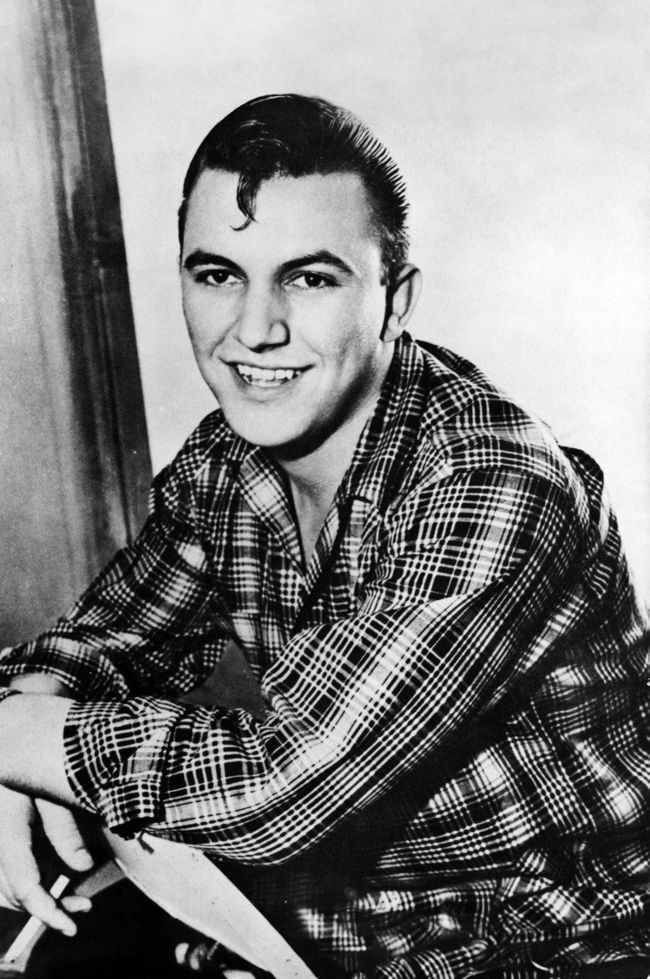
(left) with a kiss curl at the dawn of rock’n’roll
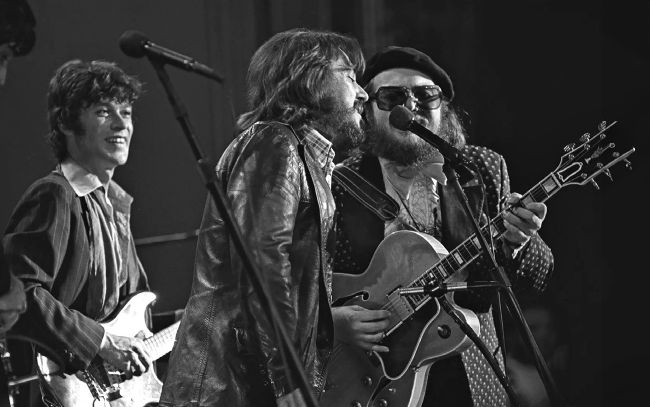
On-stage with The Band’s Robbie Robertson and Dr. John during The Last Waltz, Winterland Ballroom, San Francisco, November 25, 1976.
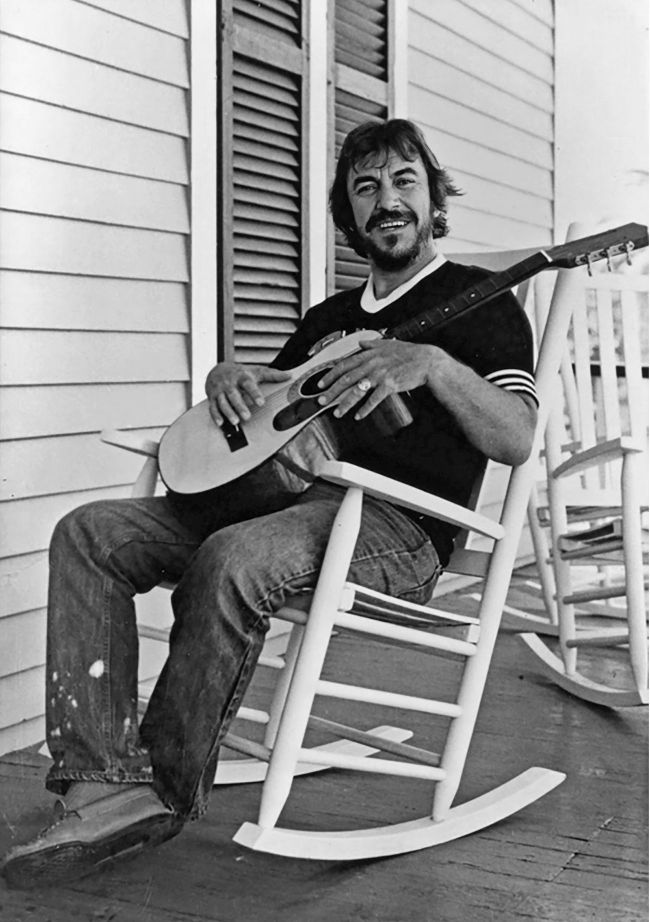
Porch songs: Bobby Charles pretending he plays guitar
J.C. Hopkins
★★★★
It’s A Sad And Beautiful World