Simply The Best?
The Red and Blue albums are The Beatles’ canonical compilations – gateways, for many, to the world of Fab. Remixed, expanded, and featuring Now And Then, they return, 50 years on, and continue to ask questions. Like who actually compiled them? And how definitively do they represent the band? “The idea was to show their evolution,” discovers Danny Eccleston, “from the beginning to the end.”
Portrait by Angus McBean.
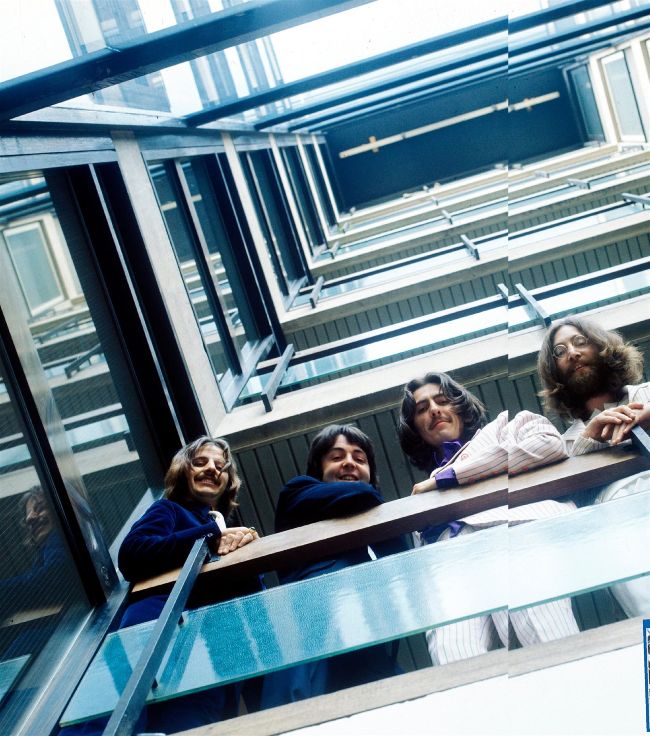
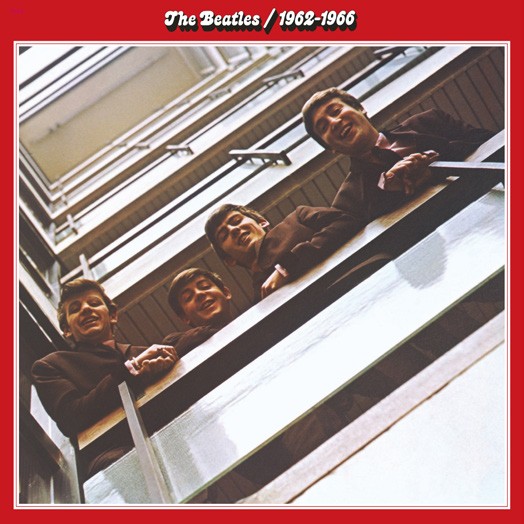
When we get older: The Beatles in 1969 at EMI’s Manchester Square building, London W1, from Angus McBean’s shoot for the cover of the shelved Get Back LP. A different frame from the session appears on the front of the Blue (and the back of the Red) album.
© Apple Corps Ltd
BY THE END OF 1972 IT HAD already become clear to John Lennon, George Harrison and Ringo Starr that they may have made a mistake hiring Allen Klein as their manager. Paul McCartney, of course, had come to that conclusion long before.
The individual Beatles were flying high in their solo careers, but with their contract due to end, dissatisfaction with Klein and his practices was coming to a head. Former London Records producer Allan Steckler, employed by Klein in 1969 to work with artists including The Rolling Stones and, after their acquisition by Klein, The Beatles, could sympathise.
“Working for Allen Klein had its benefits and its shit days,” states the 89-year-old music biz lifer, philosophically, from his New Jersey home. “Some days he could be the greatest person in the world. Most days he was the biggest asshole you ever met.”
With the Apple organisation that Klein still headed owing product to EMI and Capitol Records, but nothing in the pipeline, the pugnacious mogul called Steckler into his office. “Can you come up with something?” asked Klein.
In late 1971, with The Rolling Stones recently severed from Klein but their existing catalogue still controlled by the pipechewing martinet, Steckler had been charged with the collation and packaging of Hot Rocks 1964-1971, quickly to prove an enormous and enduring success (it’s since clocked 12x platinum in the US). Unsurprisingly, Steckler suggested doing something similar with The Beatles.
“And The Beatles being The Beatles, one album turned out not to be enough,” says Steckler. “So I went to Klein and I told him that and he said, ‘Do two albums.’ So I did.”
Single-handed, or so he tells MOJO, Steckler compiled the tracks and chose the artwork. “I was in England months before,” he says, “and I came across the artwork for their proposed Get Back album. And I loved it. And so when I was putting these albums together, I remembered those photographs. And I said they would be perfect for this.”
Steckler pauses. He is a good-humoured fellow but when he continues it’s with an unmistakable pinch of Bronx pepper.
“I put that package together. And I never got credit for it. Because one of the things Allen Klein frowned upon was letting people take credit for what they’d done.”