FILTER REISSUES
The toxic avengers
Cult ’90s Californian trio get the monument they’ve long deserved: an 11-LP box set of everything they released during a decade eternally under the radar.
By David Fricke.
Acetone
★★★★
I’m Still Waiting.
NEW WEST. LP
IN MAY, 1994, only a few weeks after Kurt Cobain’s suicide shattered the giddy momentum of alternative rock’s mainstream insurrection, the Los Angeles trio Acetone – bassist and lead singer Richie Lee, guitarist Mark Lightcap and drummer Steve Hadley – arrived in Nashville to make what they expected to be their second album. Their interior baggage far outweighed the physical luggage. “We went down there without any songs written because Steve and Richie were too strung out,” Lightcap admits in the linernotes here, referring to his bandmates’ drug habits at the time. And there were the expectations from Acetone’s quietly profound arrival in 1993: a self-titled EP and full-length debut, Cindy, that countered the narcissistic ire of grunge with a raw poise of psychedelic dreaming and desert-pilgrim crawl, as if The Beach Boys’ Pet Sounds, Big Star’s Third and Spacemen 3’s Playing With Fire were spinning on the same turntable – at Galaxie 500 speed.
In fact, Acetone’s next release – a 1995 mini-album I Guess I Would, partly cut in Nashville, finished back in California – was an inspired dodge of that writing block: all countr y ballad covers (George Jones, John Prine, Johnny Horton) and Olde English trance
(The Fugs adapting William Blake). A 10-minute slow burn through Kris Kristofferson’s Border Lord was Acetone at their noisy and ascetic finest, spiked with Lightcap’s overloaded fuzz and wah wah spasms. Here, too, was a band looking down the road with more clarity than they knew. “Runnin’ like you’re runnin’ out of time,” Lee and Lightcap sang in pinched, serrated harmony, as if perched over a boombox mike. “When you’re headin’ for the border/Lord, you’re bound to cross the line.” Acetone ended, like Nir vana, with a suicide: in July 2001, Lee took his own life, aged 34.
BACK STORY:VAPOR TALE
● Neil Young founded Vapor Records with his manager Elliot Roberts, launching the imprint with his 1996 soundtrack to Jim Jarmusch’s Dead Man and the signing of Jonathan Richman, who made eight LPs for the label. Other releases included one-offs by Vic Chesnutt and Catatonia; solo efforts by Crazy Horse members; and a string of sellers by Canadian twins Tegan And Sara, who signed to Vapor aged 19. “The best gift you can be given as a young artist is the time to develop,” Tegan said of their tenure. Vapor effectively ended with Roberts’ death in 2019.
I’m Still Waiting is the monument his band has long deser ved – ever ything Acetone released (and then some) during a decade eternally under the radar, in a mesa-like box of 11 vinyl discs. One photograph in the 60-page book of lavishly illustrated histor y sums up that curse of promise: a poster for two 1993 shows in Britain with Acetone supporting The Verve and billed over the newborn Oasis. In his linernotes, longtime friend Drew Daniel of Matmos cites the prophetic contradiction in Acetone’s name, a combination of household science (a toxic solvent used in paint thinner) and playful licence (an exotic cocktail in Kurt Vonnegut’s 1963 novel Cat’s Cradle): “Its mingled connotations of beautiful craft and poisonous risk would eventually play out.” J Spaceman of Spiritualized, another fan, contends in a testimonial that “lacking any record company support meant their focus remained intact.” It was a purity that barely kept the lights on – but rarely dimmed.
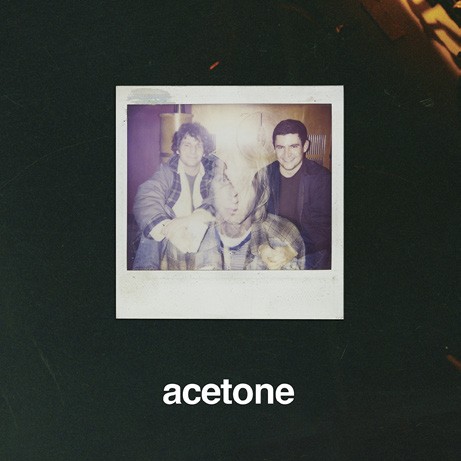
“Acetone played and believed together until they ran out of road. Here is every mile as they recorded it and lived it.”
Lee, Hadley and Lightcap were unlikely mystics. The first two grew up in skateboard country, Orange County, California; Lee met Lightcap, originally from Philadelphia, at the California Institute Of The Arts, where the latter was playing tuba and studying avant-garde music. They first recorded (with a fourth member) as Spinout, a party-punk band, cutting a 1990 LP for the hip-hop label Delicious Vinyl. Those hardcore roots were still showing on the 1993 Acetone EP, the first release in what must have seemed like a golden ticket deal with Vernon Yard, a Virgin subsidiar y that issued The Verve’s first wax in America.
I’m Gone introduces a power trio in transition, hijacking Nir vana’s soft-loud template with custom prayer and fury – Lee and Lightcap’s jubilantly rough vocal blend, like the Gallagher brothers with Richard Ashcroft’s heavenward gaze; the white-noise Lou Reed storming across the Mojave in Lightcap’s guitar break. But the EP ends with Cindy: eight minutes of unbroken spell built on a serpentine bass guitar hook, countr y-surf twang and campfire-doo wop crooning. Here is ever ything Acetone did best going for ward, in irresistibly slow intimacy, the way it often started in the band’s pool-house practice space.