Ctrl-Alt-Del
The story of the three-finger salute
David Crookes looks at the origin and use of a key combo that has made its way into modern culture
Inspirational stories from computing’s long-distant past
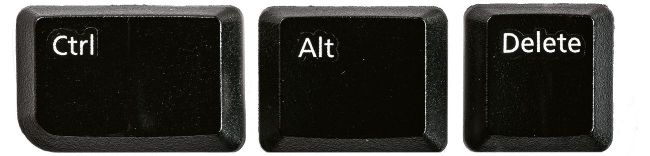
The three-finger salute has been a staple of computing life for decades
In August 2001, more than 300 people attended an event marking the 20th anniversary of the IBM PC. Held at the Tech Museum of Innovation in San Jose, California, it was hosted by Microsoft founder Bill Gates and Intel’s then chairman Andy Grove, and it featured some of computing’s most illustrious figures. Among them were Rod Canion, co-founder of Compaq, and Daniel S. Bricklin, co-creator of VisiCalc. David Bradley was also on the panel. He had been one of the 12 IBM engineers who worked on the first IBM PC – model 5150 powered by an Intel 8088 chip running at 4.77MHz – although he was better known for inventing a now legendary key combination: Control, Alt and Delete.
Pressing those keys back then performed a simple task: a swift reboot of the computer, bypassing system tests. But the combination soon became an integral part of computing, and its use skyrocketed with the rise of Microsoft Windows as an increasing number of users needed to revive unresponsive machines.
It’s why, during the 2001 meetup, the room erupted into laughter when pressing Ctrl-Alt-Del was known Bradley, wanting to have a bit of fun, quipped: “I have to share a credit. I may have invented it, but Bill made it famous.” The inference, in jest, was that Ctrl-Alt-Del had become a solution to a Windows problem, one that users needed to invoke more often than Microsoft would have liked.
In response, Gates sat expressionless, staring at Bradley. And it proved to be a rather awkward, albeit rather delicious, moment in tech history.
Mighty oaks
By this point, Bradley had proven himself to be an experienced, talented engineer. He graduated from the University of Dayton, Ohio, in 1971 with a degree in electrical engineering, completed his Masters at Purdue University in Indiana the following year, and later earned a PhD.