CATFISH Whiptails
CHIEFWHIP!
Slender and graceful, the whiptails of Sturisoma and Sturisomatichthys can be hard to identify but easier to keep, writes Chris Sergeant.
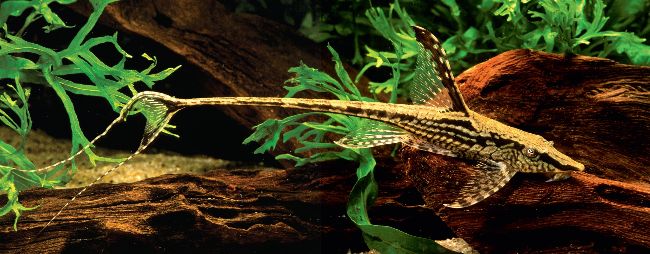
Giant whiptail, Sturisomatichthys aureus.
CHRIS SERGEANT
Chris works in coservation research and regularly writes for aquarium publications.
ALBEIT BRIEFLY, it was a relief to step foot back into a bricks-and-mortar fish shop again late in 2020. Scouring the banks of intricately stacked tanks, the array and condition of fish on display seemed just as impressive as pre-lockdown, a real credit to the staff during difficult times.
Of all the piscine wonders on offer, it was the abundance of loricariids that really piqued my interest, and suckermouth catfish fans like myself were spoilt for choice. Ancistrus and Hypancistrus were out in force, providing a flash of colour amongst their wooded enclosures, backed up in the colour stakes by Peckoltia species, while hulking Panaque hogged the limelight in some set-ups.
For those of us wanting an armoured catfish with a twist, there were treats. Some prize Farlowella meant there were elongated rostrums aplenty, while Loricaria and Rineloricaria were flying the flag for the long-tailed varieties.
And nestled amongst them all were my favourite catfish of all - the whiptails of Sturisoma.
Sturisoma are refined catfish with an air of grace about them - no careering though the undergrowth like some others, sending the décor flying. The ‘whiptail’ name comes courtesy of their flowing, filamentous caudal fin extensions, and the best specimens may have inches upon inches of ‘whip’.
Naming revisions
Not every species labelled as Sturisoma is quite as it seems, with a few species from the closely related Sturisomatichthys sometimes mixed in for good measure, and so it’s worth digging a little deeper into their family’s affairs.