Emerson, Lake & Plamer Tarkus
In an article from Prog 17, the late Keith Emerson remembers how ELP’s second album was an opportunity for the trio to prove themselves.
Words: Malcolm Dome
For Emerson, Lake & Palmer the year 1971 represented an opportunity to establish that this union of three giant talents was more than a mere transient supergroup, but had the chance to become a firm fixture on the prog scene. Their self-titled debut album from the previous year had displayed some consummate musicianship and spectacular performances, yet had also been rather inconsistent. But it did create a solid base from which the trio were now ready to launch innovative and challenging thoughts. As was to be proven on Tarkus.
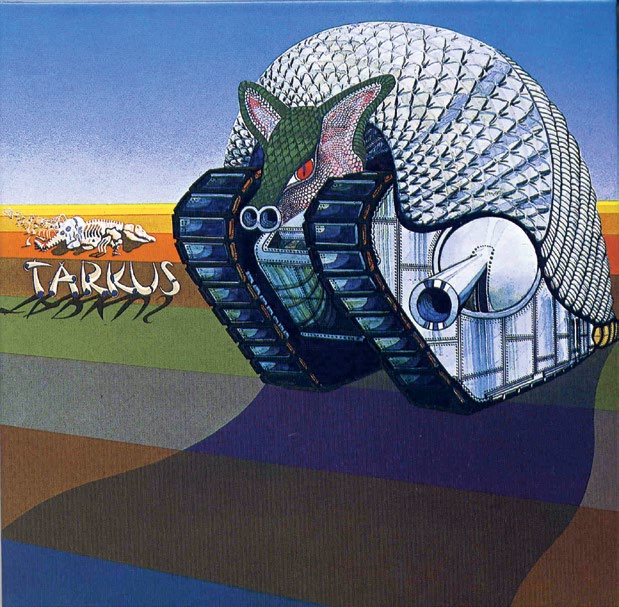
Tarkus, 1971.
What was to give this album its tone, timbre and colouring was the epic title track, which took up the whole of the first side of the original vinyl, being split into seven movements. This was a bold, adventurous step for the band, and one that relied heavily on Keith Emerson’s own aspirations and influences. In fact, it was the keyboard master who really came up with the musically complex composition in the first place.
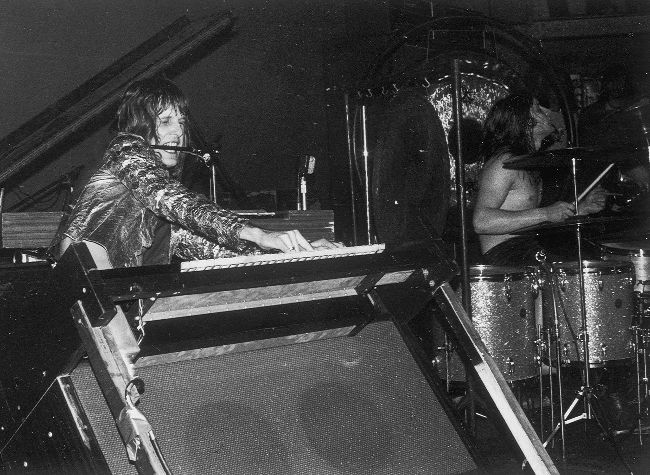
Keith Emerson and Carl Palmer.
PRESS/ELP
“After the release of ELP’s first album and during the live recording of Pictures At An Exhibition, it is coincidental that Carl Palmer and I were working individually on the same sort of complex rhythm ideas,” recalled Emerson in 2010. “He was doing this on his practice drum pads, while I was at home on an upright piano in London and a Steinway in Sussex. As my ideas seemed to complement what Carl was up to, I pursued this direction.
“We focused on a centrepiece first to establish a concept. Sometimes we didn’t know if it would become a conceptual piece of work at all. All of the compositions had to bond and work together, and if they didn’t they were used somewhere else.”
For this 20-minute exposition, Emerson drew heavily on the work of both Frank Zappa and the Argentinian classical composer Alberto Ginastera.