Old Ways
If any band can transcend the gloom that 2020 left behind, Prog’s bets are on Wardruna. The folk-infused experimental collective might have had their wings clipped with the delayed release of the otherworldly Kvitravn, but they’re now ready to soar. Prog explores old knowledge and new sounds with founder Einar Selvik.
Words: Jonathan Selzer Images: Arne Beck
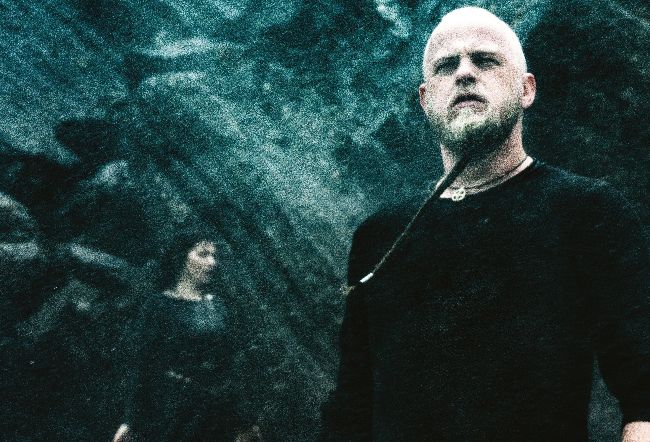
The white raven.
When Wardruna first announced their fifth album, Kvitravn, readers could have been forgiven for wondering if the Norse spiritualists were signalling a love of prog’s deepest cuts. Released seemingly aeons ago in a cusp-of-pandemic February last year – three and half months before Kvitravn was originally slated for release – the video for the track Grá, complete with wolf prowling around frontman Einar Selvik, triggered a sense of familiarity for anyone with an abiding love of krautrock. The song itself was built on a heartbeat-ratcheting, tribal groove, beaten out on hide drum and bones. It was arrestingly stark yet reached a point of rapt intensity as Lindy Fay Hella’s unfettered, ululating chant ignited around Selvik’s sonorous incantation, but the song’s rolling, traction pull matched, with remarkable precision, Can’s tom-tom-driven Smoke (E.F.S. Nr. 59) from 1976’s Flow Motion.
“This album explores in much more detail certain concepts around humans and how we view ourselves; how we view our surroundings, and our place within it.”
Sitting at home with an ancient Nordic lyre propped up behind him, Einar Selvik looks quizzical. “I know Can by name,” he offers via Zoom, “but I can’t say I know their music.”
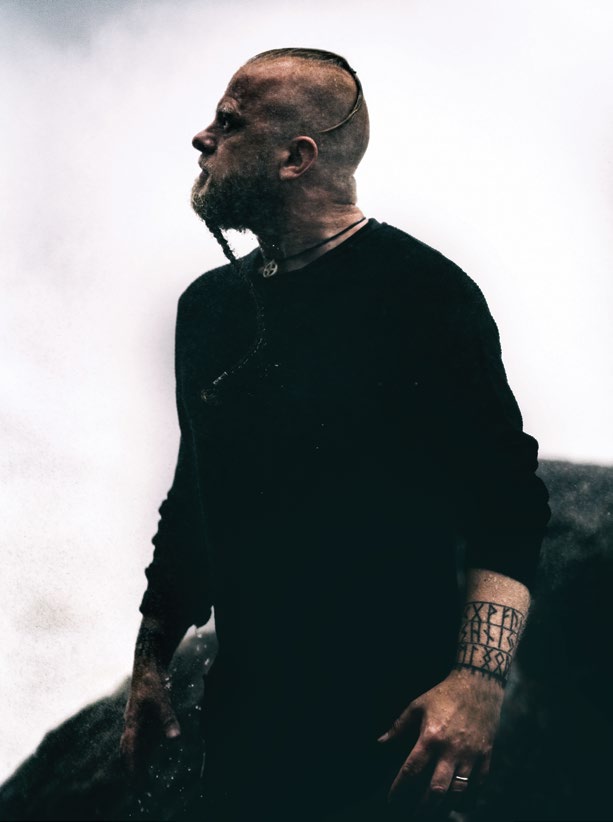
Einar is on hand to repair and realign the senses.
Dammit. Wardruna, however, for all their roots in pre-Christian Norse culture and beliefs, have an instinctive, boundless capacity for connecting, for resonating on the deepest, most personal of levels, irrespective of genre allegiance, age or nationality. Their music is otherworldly yet intimate, calibrated to an internal clock of infinite patience, but one that answers their call. Fans have experienced a host of emotions at their live shows, and one of them is gratitude. From their first outing in 2009 in front of 100, soonto-be-humbled metalheads at the Viking Ship Museum in Oslo, to soldout shows at London’s Shepherd’s Bush Empire and around the world; in front of caves, overlooking burial grounds and in the elemental, panoramic surroundings of the Red Rocks Amphitheater in Colorado, their performances have become acts of communion beyond the scope of any traditional rock show. They’re consciousness altering not because they scramble the audience’s senses, but because they repair and realign them, put the audience in touch with something that, if esoteric, is only so because it’s something they feel they’ve always known.