Argus Panoptes
Wishbone Ash never set out to create a progressive concept album, but things took an unexpected twist on their third record, Argus. Fifty-one years on, it’s been reissued and expanded into a handsome sevendisc multi-format box set. Prog sat down with Martin Turner and Andy Powell to explore the record’s genesis and legacy, taking in everything from stolen swords and nascent romances to trancewriting and twin guitars
Words: Chris Wheatley
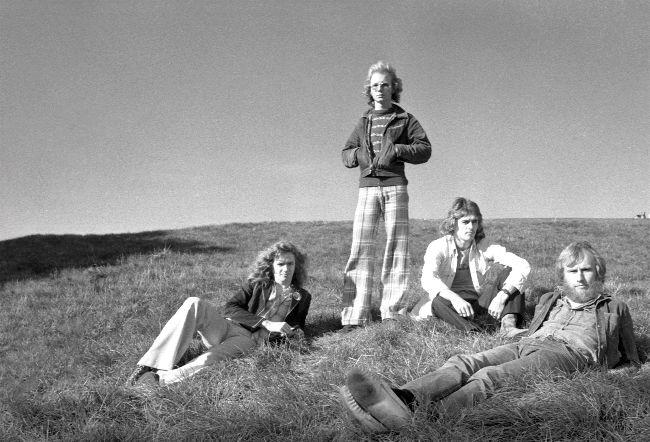
Wishbone Ash:
Just
Blowin’
Free.
Image: Barrie Wentzell
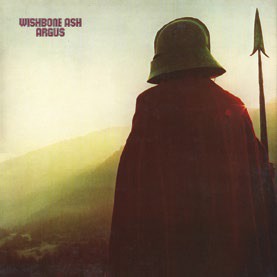
1972’s Argus. Who is the mysterious warrior?
By the early 70s, under the management of Miles Copeland, Wishbone Ash were two albums into their career and gradually rising, but nobody could have predicted what was to come. Officially formed in 1969, the British blues rockers came into being when former The Empty Vessels vocalist/bassist Martin Turner and drummer Steve Upton hired guitarists Andy Powell and Ted Turner to complete a quartet. They released their self-titled debut in 1970 and Pilgrimage in 1971, but it was 1972’s extraordinary Argus that propelled them to new heights.
“We’d done a couple of years touring the clubs and the town hall circuit in the UK,” recalls Powell. “Then we started playing bigger venues and travelling across the US. We realised that the music needed to be paced differently for those larger venues.
And we needed a bit more going for us, thematically, we needed to really define and refine our identity. Hence Argus. We had a plan.”
For Turner, who wrote the bulk of the group’s lyrics, Argus provided the chance to tie several strands together.
“We were a well-oiled machine by that point,” he says. “All the themes on that record were things that I had been thinking about for a very long time.