The Men For All Seasons
In September 1989, Marillion unveiled their new album, Seasons End, and new vocalist, Steve ‘H’ Hogarth. As one chapter ended, a new one opened and with it came new challenges and experiences. To coincide with the release of a deluxe edition, the band revisit the making of the record that helped steer their career in a new direction – and prove there really was life after Fish.
Words: Dom Lawson Portrait: Paul Cox
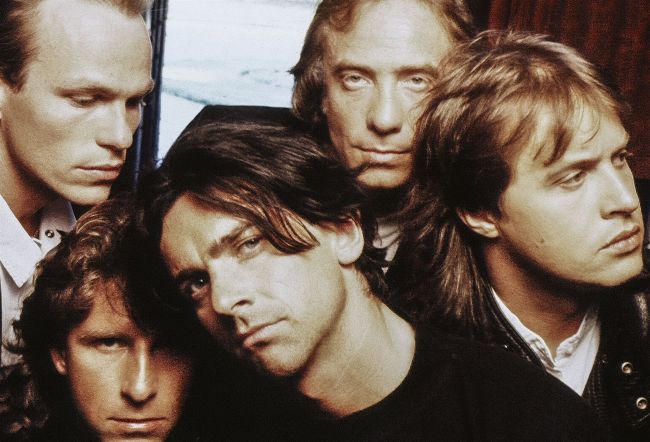
Marillion 2.0, with Steve Hogarth stepping into vocalist Fish’s shoes.
“When I joined the band I thought it might last for two or three albums, you know, with a bit of luck.”
Steve Hogarth
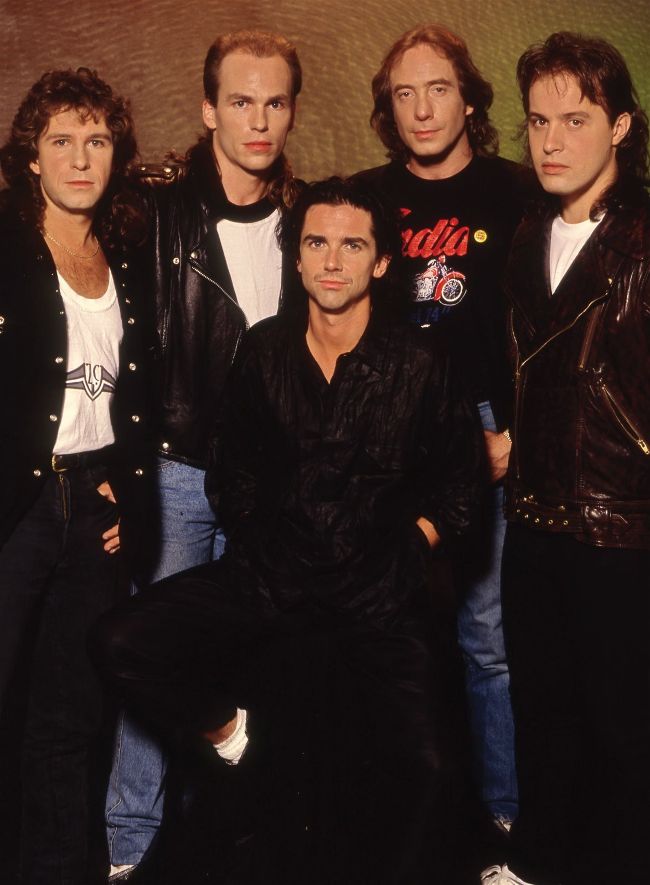
Marillion in 1989, L-R: Pete Trewavas, Mark Kelly, Steve Hogarth, Ian Mosley, Steve Rothery.
RAY PALMER ARCHIVE/ICONICPIX
As surprising as it seems, for the last five months of 1988, Marillion were an instrumental quartet. After the acrimonious departure of frontman Fish that summer, Aylesbury’s finest were faced with the unenviable task of deciding what to do next. They were still working on new music, of course, because that’s what they’d always done (and still do nearly 35 years later), but the spotlight that had illuminated their former singer was now hitting an empty centre-stage.
“There was a sense of relief when Fish left, to be honest,” says guitarist Steve Rothery. “It was like a huge weight was lifted off our shoulders, just because things had got so bad. What had been a great working and personal relationship had degraded to the point where it was just unworkable. This was a bit of a journey into the unknown, but we had faith in the music that we’d already written, and that sustained us.”
“Strangely enough, I don’t think any of us were panicking, like, ‘Oh my God, what are we going to do?’” says bassist Pete Trewavas. “It wasn’t a shock-andawe moment. It was more, ‘We’re just going to carry on because we’re good at what we do!’ We knew what we did and we knew its worth. We also realised that we had some good music, and we just wanted to complete the new equation with a good singer. It was worth the wait to find somebody like Steve Hogarth, it really was.”
Part of the huge challenge that Marillion were now facing was that Fish had been such a distinctive lyricist and character, and one whose entire persona and approach were inextricably woven into everything that the band had released. Replacing such a charismatic figure was no small task, but Trewavas, Rothery, keyboard player Mark Kelly and drummer Ian Mosley remained united, determined to use this unexpected pause in their story as a means to forge ahead anew.
“Yeah, we’d pre-empted it a little bit, the fact that Fish was such a singular frontman,” says Trewavas. “We decided early on that it was going to be a big ask to find someone that was going to be not just a great singer, but a great frontman and a great lyricist. The only thing we could really do to help that situation was to find a couple of good lyricists, and see what direction we thought the lyrics might want to take.” Did none of the remaining quartet fancy having a go at writing lyrics?
“Ha ha ha! No. It was suggested at one point that I might want to sing, but I didn’t,” Trewavas reveals. “I do love to sing, but I did not want to be a frontman or a singer. I’m terrible at remembering words, so it was definitely a no-no! In all seriousness, I thought it was a bigger thing. What we needed was a proper frontman. As well as looking for a singer, we continued working on the music we’d been writing. Then we found this lyricist, John Helmer, and a couple of other people were suggested as well. I think Viv Stanshall was one of them, but don’t quote me on that! [Laughs]”
“We were trying to find lyrics that would be valid in the context of what we do,” Rothery explains. “There were lyricists suggested, but there were things I picked up on in John Helmer’s lyrics for other people. I thought he was very wordy, in a clever sort of way, and I could imagine him working well with us. So we had a meeting with him in a pub in Hammersmith. We had a chat and I gave him a couple of ideas for lyrics, and he came back with Berlin and The King Of Sunset Town, and they were both in the right direction.”
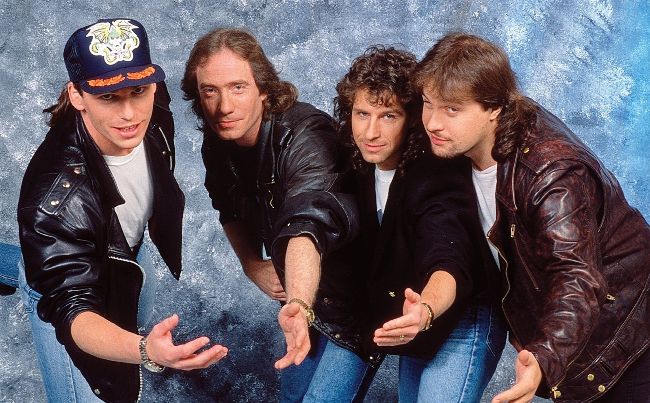
And then there were four… The band in 1988, post-Fish, pre-H.
RAY PALMER ARCHIVE/ICONICPIX
“There was a sense of relief when Fish left, to be honest. It was like a huge weight was lifted off our shoulders.”
Steve Rothery
When it came to selecting their new singer, Marillion were collectively unsure what it was they were looking for, but they absolutely knew what they didn’t want.
“Exactly. That’s true,” says Rothery. “We had the various types of singers who came along. We had the straightforward rock types who didn’t really understand where we were coming from, to the people who really wanted to be Fish. That was kind of missing the point of what we were looking for.”
“We did have a period of time when we were auditioning people – maybe two or three people a day at some points,” says Trewavas. “There was a guy that flew over from Ireland, from an Irish band, and he was really, really good, but a bit too established in what he was doing. We wanted somebody who would grow with a new version of what we wanted to present to the world. We didn’t want someone saying, ‘Oh, but this is the way I’ve always done it in my band!’ You know? So it was difficult, but then we found Steve.”
Even now, the union of 80s progressive rock revisionists Marillion and aspiring art-pop singer songwriter Steve Hogarth seems close to implausible. But here we all are, 34 years later, celebrating their first album together, while still reeling from the brilliance of their recently released 20th studio opus, An Hour Before It’s Dark. Hogarth’s impact on Marillion and their music was instant and, as we now know, destined to endure. But he could just as easily have ended up languishing on drummer Ian Mosley’s back seat.
“We were rehearsing in Pete’s garage, that he’d converted into a little studio,” Mosley recalls. “We were writing there, just outside Aylesbury. I was living in Gerrards Cross, which is half an hour’s drive from there. Every morning our management would usually send me cassette tapes of prospective singers, in an envelope, and on the way to Pete’s garage I’d listen to them. I’d listen to them for a bit, take them out and then throw them over my shoulder into the back seat. One morning I put this cassette in and Steve’s voice came out. Straight away, I stopped the car and pulled over in a lay-by, just listening. It was instant. I thought, ‘Jesus, this guy’s got a brilliant voice.’ In the envelope there were some pictures of him, and I thought he was a nice-looking boy as well! So then I thought, ‘Is it going to be too much to ask that he’s a nice bloke, too?’ [Laughs]”