DERAM DECCA
Daze Of Future Passed
When starched-shirt British jazz and classical label Decca decided to ‘get hip’, they started the offshoot Deram and opened the doors to psychedelia and prog rock, launching some of the biggest and best-loved acts in our world – and some minnows that slipped the net. Upcoming anthology Psych! British Prog, Rock, Folk & Blues 1966-73 documents the scene, and David Hitchcock, Pye Hastings, Davy O’List and more cast their minds back to those wonder years.
Words: Mike Barnes
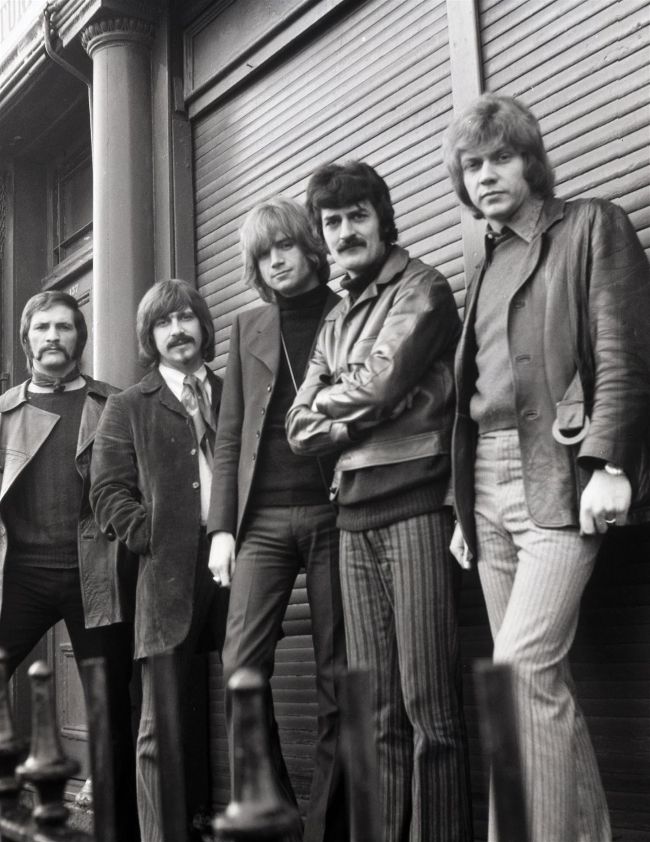
The Moody Blues: one of Deram’s earliest successes.
Image: Press/Universal Music Archive
“Ahip label for groovy people” was how Decca Records subsidiary Deram was announced in Melody Maker on its inception in September 1966. This separated it from the rather fusty image of its parent company, which was formed in 1929 and had an impressive back catalogue of jazz and classical recordings. It was well-known that while they’d signed The Rolling Stones and Marc Bolan (and were soon to sign Bowie), they’d passed on The Beatles and the label’s roster included Val Doonican and Mantovani. With Swinging London in full spate they needed a bigger piece of that action, focusing on a younger market.
Deram was formed by Decca executive Tony Hall and A&R Head Hugh Mendl, the name coming from a trademark they owned for a nowdefunct ceramic hi-fi cartridge. Hall stated that Deram was to have “all the enthusiasm of an independent with all the power and promotion behind it of a major company”. To hit their market, Mendl sought out younger people
“Caravan’s IfICouldDoItAllOverAgainI’dDoItAll OverYoucame out on Decca, then they were switched to Deram, then later switched back. I’ve no idea why.”
David Hitchcock
in A&R, so in 1967 they employed a teenage David Hitchcock as ‘Sleeve Co-ordinator’, liaising between A&R and the art studio. Decca were signing “anything and everything” he says, recalling: “Hugh Mendl’s attitude was ‘Surround yourself with bright people and give them the freedom to fail.’ We failed, but sometimes we hit gold too. I’d meet Hugh and talk about bands I’d seen in clubs I’d gone to, like UFO.”