GB
  
You are currently viewing the United Kingdom version of the site.
Would you like to switch to your local site?
29 MIN READ TIME

Finding Neverland

The early 2000s were a time of change and self-discovery for Marillion. Following the success of their early crowdfunding experiment on Anoraknophobia, they returned to the studio to create an ambitious follow-up that would land them back in the UK Top 10. As Marbles reaches its 20th anniversary, the five-piece recount the falling outs, ‘happy drugs’ and tales of Neverland that led to the modern-day version of the band we know and love.

Images: Carl Glover

"The past is foreign country, they do things differently there.” It’s unlikely that LP Hartley, author of The Go-Between, was referring to experimenting with ecstasy for the first time in your late 40s while working on a new album, but this is the seemingly alien landscape that singer Steve ‘H’ Hogarth found himself in as Marillion began the lengthy and ultimately rewarding process of making the hugely creative Marbles.

“Let me tell you: ecstasy –it’s the way to go, for a little while at least,” says Hogarth, you can almost see the twinkle in his eye.

He’s on the phone at home and we’ve been chatting about the band’s mindset post-Anoraknophobia and its industry-changing, crowdfunding model. A similar question to other members of Marillion had them reflecting on the lean commercial years of the Castle albums like Marillion.com, and how Marbles had brought them blinking back into the creative and critical light. But not Hogarth.

“I think this was the record where I did change how I wrote, absolutely.”

Steve ‘H’ Hogarth
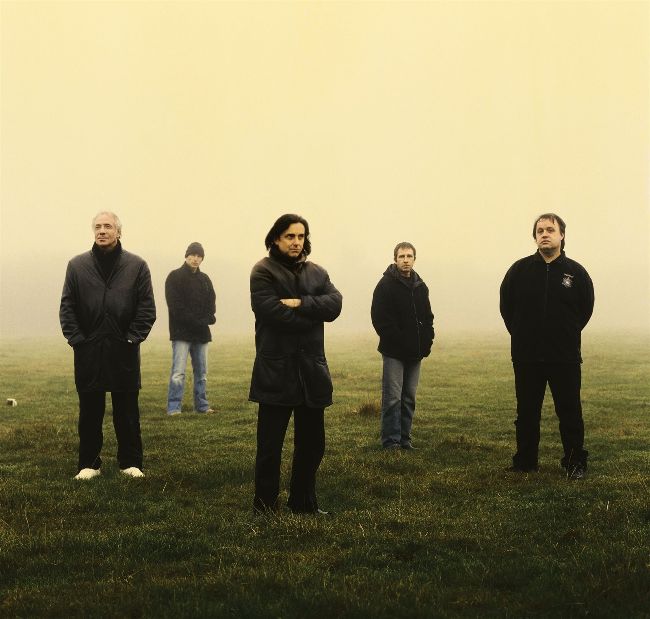
“I thought you said the pub was this way?” The path to Marbles wasn’t always clear.

“Sometimes you know you might be catching lightning in a bottle, and as soon as we had some of it written, we knew we were on to something good.”

Mark Kelly

“In a sense, it was quite an interesting time. I remember being down in the West Country working on [closing track] Neverland. Just, you know… just in love with everything. But particularly Mark’s opening chords for that song and all of us being so in love with it that we didn’t want to fuck the rest of the song up, so we just kept going round and round, and of course, being somewhat high on ecstasy. I was quite happy to go round and round…”

It’s 2002 and Marillion are no longer in a state of flux. The 90s started with the promise of Holidays In Eden, but their major-label dreams were dashed by the middle of the decade after EMI shrugged them off following the prolonged and poorly received (by the label, at least) Brave sessions and album. Even though the band rallied with the career-defining Afraid Of Sunlight, it wasn’t enough to keep them cloistered as a major label priority. The end of the decade saw them deliver three albums in as many years, only to find refuge in a new kind of crowdfunding model that not only kept them propped up as a working band, but gave them the breathing space to create new music, too. It was no coincidence that Anoraknophobia was a creative leap from Marillion.com, but Marbles was to be something else again.

“Some albums are key moments in our musical journey,” says Pete Trewavas, “and I think Marbles is definitely one. I think Anoraknophobia might have been one, too, because having done that, it allowed us to relax. It gave us breathing space to recognise a bit more of our original DNA and what made us the band we were. You forget that when you’re on this musical treadmill sometimes.”

“We were feeling very positive at that point,” adds Steve Rothery about the period leading up to the recording of Marbles.

“With Anoraknophobia being so well received, it finally felt like we’d escaped the clutches of independent labels. And, you know, could concentrate on trying to make a world-class record. We went down to Sil Willcox’s place outside of Bath to work –he managed the Stranglers and the Wurzels –and we drank scrumpy [strong cider] and played around with the songs there. That’s where You’re Gone came from [see box-out on p39], my faffing around with the Logic sequencer where you can memorise chords and play them with one finger, which is about my level on a keyboard.”

Mark Kelly plays us the opening chords to Neverland. He’s seated in his home studio surrounded by keyboards, gold discs on the wall behind him. We’re chatting over Zoom when he plays what would become the opening to a song that’s still a staple of the band’s live set more than two decades later.

“I liked that place near Bath,” he says. “A cottage more than a rehearsal space, really, but that’s where I came up with these chords for Neverland; the components, at least. And everybody was like, ‘Oh, that sounds interesting.’ That was right from the start and then later we had things like Invisible Man, which was really exciting. Sometimes you know you might be catching lightning in a bottle, and as soon as we had some of it written, we knew we were on to something good. There was definitely a good atmosphere around the band at that time.”

Unlock this article and much more with
You can enjoy:
Enjoy this edition in full
Instant access to 600+ titles
Thousands of back issues
No contract or commitment
Try for 99p
SUBSCRIBE NOW
30 day trial, then just £9.99 / month. Cancel anytime. New subscribers only.


Learn more
Pocketmags Plus
Pocketmags Plus

This article is from...


View Issues
Prog
Issue 151
VIEW IN STORE

Other Articles in this Issue


REGULARS
PROG PRESENTS… Discovering
ESOTERIC RECORDINGS
Ed’s Letter
Hello and welcome to the latest issue of
Bloody Well Write
S end your letters to us at: Prog, Future Publishing, 121-141 Westbourne Terrace, London, W2 6QA, or email prog@futurenet.com . Letters may be edited for length. We regret that we cannot reply to phone calls and we cannot always respond to individual messages. Find us on facebook.com under Prog
LEPROUS READY THEIR “UNIFYING” NINTH ALBUM
IF IT’S OUT THERE, IT’S IN HERE
MARCOS CURIEL
Inspiring the wider music world…
ALBER JUPITER
Neu!-inspired duo roll out the pedals for their cosmic instrumentals.
IT'S PPOG JIM BUT NOT AS WE KNOW IT
COCTEAU TWINS TREASURE (4AD, 1984) Back in the
OUDEZIEL
Our far-out trip to far-flung prog
TEIGER
Meet the atmospheric London trio who refuse to be pigeonholed.
LAST PLANE OUT
Swedish pop singer and music journalist join forces for a progtastic project.
CANDACRAIG
Former thespians finally find their voice as neo-prog folk duo.
Q & A BILL FISHER
The Church Of The Cosmic Skull frontman discusses thinking like a billionaire, running his own DIY label, and “yacht doom”.
THE PROG INTERVIEW RICHARD THOMPSON
Every month we get inside the mind of one of the biggest names in music. This issue it’s Richard Thompson. Best known for co-founding Fairport Convention in the 60s, the British singer and guitarist has gone on to enjoy a successful solo career with his distinctive brand of progressive folk and was even awarded an OBE from Queen Elizabeth II in 2011. His latest release, Ship To Shore, finds him seeking inspiration from a diverse array of genres and styles. He looks back over his storied career so far and reveals why he has no interest in sitting on his laurels.
PENDRAGON
A kick up the 90s? Neo-prog torchbearers’ standout album from the genre’s anni horribiles gets a welcome reissue.
Take abow
RIVERSIDE
HUW LLOYD-JONES (ALSO EDEN)
The great and good of progressive music give us a glimpse into their prog worlds. As told to Grant Moon.
FEATURES
IN MEMORY OF MIKE PINDER
As co-founder of The Moody Blues, keyboardist Mike Pinder played a significant role in transforming the group from an R&B/beat combo into a chart-topping symphonic progressive powerhouse. He created music from the heart and used his detailed knowledge of the Mellotron to great effect on some of the Moodies’ best-loved songs. His impact on the world of progressive music will continue to be felt by generations to come.
IN MEMORY OF RICHARD TANDY
Best known as the long-standing keyboardist in Electric Light Orchestra, Richard Tandy’s instrumentation was a key part of the Birmingham band’s sound, including on the Top 10 hit, Mr Blue Sky. Described by drummer Bev Bevan as Jeff Lynne’s “right-hand man”, he played on nearly all their studio albums, and also worked with George Harrison, Tom Petty and The Everly Brothers. He died in May at the age of 76.
Talking About Talk – The Forgotten Yes Album
With the long-awaited 30th anniversary reissue now available, Yes’s final album featuring Trevor Rabin and Tony Kaye is well overdue for re-evaluation. This is the story of Talk, the band’s innovative and relatively unsung masterpiece, and the tour that followed its original release in 1994.
Heavy Mellow
Never one to follow trends, Jane Weaver has mixed things up on her dreamy new album, Love In Constant Spectacle. She’s taken a modern approach to the cut-up technique of lyric-writing and even travelled to Rockfield to record with a producer for the very first time. She reflects on the experience, talks touring plans, and explains why simpler can sometimes be better.
Droning On…
On his first Bass Communion album in 12 years, Steven Wilson pushes the boundaries of progressive music with what could only be described as a experimental noise record. The Itself Of Itself finds him taking inspiration from avant-garde composers and experimenting with studio sounds. Prog discovers how tape hiss and Stockhausen led to the creation of one of the artist’s most surprising releases
“There’s a spirit in CHINA that really moved me!”
In 2012, drummer Anthony Vanacore made the life-changing choice to migrate from the US to China. The band he started there, OU, became the first Chinese prog act to sign with a major western label and have just collaborated with Devin Townsend. Vanacore tells Prog about his collective’s boundary-breaking journey so far.
ALight In The Darkness
Self-exiled Russian artist and the voice behind duo Iamthemorning, Marjana Semkina has taken a different approach on her second solo album, Sirin. Her trademark melancholy lyrics are now ignited by anger over the political situation in her birth country, in what the singer-songwriter describes as a “unified art project”. She discusses the hope, heartbreak and personal cheerleading team that made this exciting release possible.
Daze Of Future Passed
When starched-shirt British jazz and classical label Decca decided to ‘get hip’, they started the offshoot Deram and opened the doors to psychedelia and prog rock, launching some of the biggest and best-loved acts in our world – and some minnows that slipped the net. Upcoming anthology Psych! British Prog, Rock, Folk & Blues 1966-73 documents the scene, and David Hitchcock, Pye Hastings, Davy O’List and more cast their minds back to those wonder years.
Dark Delights
Former The Eden House vocalist, Louise Patricia Crane confronts her inner demons on her second solo album. Set against a backdrop of Irish folk and mythology, Netherworld finds the Northern Irish singer-songwriter embarking on a healing journey with a cast that includes Jakko Jakszyk and Ian Anderson. Prog caught up with her to find out more.
Is This The Life We Really Want?
Norway’s Airbag have never shied away from heavy topics, and on their sixth studio album, they tackle themes of division, cancel culture and rewriting history. The Century Of The Self takes their trademark guitar sound and elevates it with bold new sonics and production techniques. Guitarist BjØrn Riis tells Prog about its creation and being part of the Cruise To The Edge “family”
Secrets From The Shadows
Nordic Giants say they’re closing the book on their early work with a new anthology with a difference. Origins takes a deep-dive into the duo’s past with a reworked selection of their singles and EPs that escalates their otherworldly soundscapes to another level. But does this mean the duo are hanging up their masks for good? Absolutely not! In a rare interview, Rôka and Löki share their own origins and reveal their exciting plans for the next chapter
Chat
X
Pocketmags Support