Taming the beast
Harvey Weinstein’s fall shows it’s time to stop powerful men behaving badly.
By Miranda France
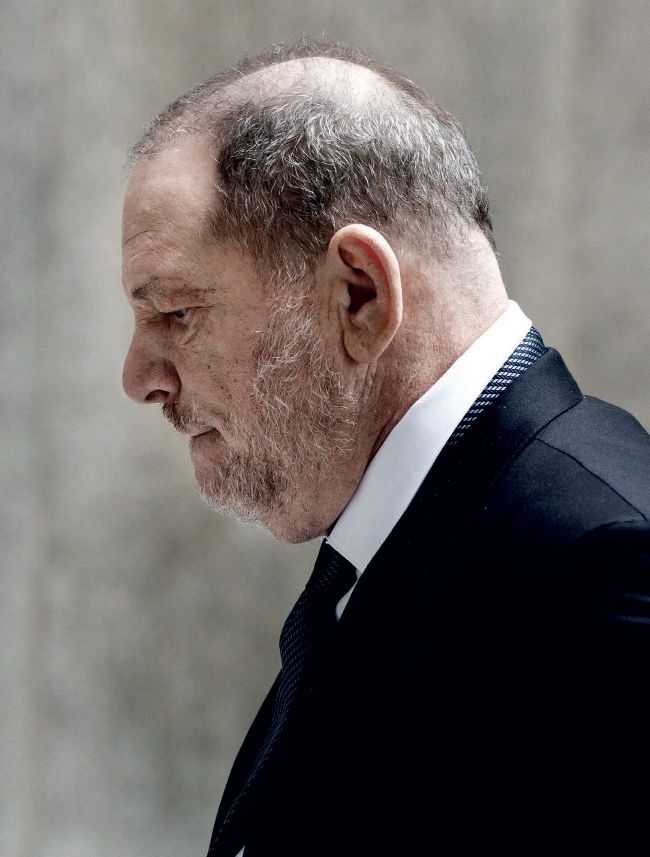
Fear and loathing: Harvey Weinstein
JUSTIN LANE/EPA-EFE/SHUTTERSTOCK
Among the incidents in my own #MeToo dossier probably only two were dangerous. The first happened in childhood. I was eight and playing in the park when a man approached me with his penis exposed and asked me to stroke it. I nearly did (I thought you should do what adults said), but then I spotted my cousin in the distance and took my chance to run after him.
The second time, I was 25 and spending the weekend with a friend at her parents’ remote cottage. On Sunday morning, we looked up from our newspapers to find a man standing in front of us. He had entered by the back door. He asked us if we were lesbians and offered various sexual services, which became more graphic as we repeatedly asked him to leave. There was no phone in the cottage, but even if there had been, I’m not sure that we would have called the police: it might have made him more aggressive. Besides, the situation was so odd, so unexpected. The intruder looked younger than us and we couldn’t tell if he was serious. Finally, he left but promised to come back with some friends. We packed our bags, worrying that we were unnecessarily cutting our weekend short. As we drove away from the cottage, we saw him returning across the fields with two others. I remember shaking with fear and relief.
My friend and I didn’t tell anyone else about what had happened, and I’m not sure that we ever talked about it again. Nor did I tell my mother about the man in the park. The common factor in so many incidents of sexual threat or assault is shame. We felt stupid for leaving the back door unlocked, embarrassed to have been spoken to in such a crude way. What had we done to let this happen? We had done nothing at all. But that’s the thing about sexual assault: by some magic equation, the shame ends up attached to the wrong person.
As every tinpot dictator knows, humiliation is a cheap and effective weapon because your victims do much of the work for you. Letting down family and friends is something most of us would do anything to avoid and that determination keeps injustices quiet, sometimes with devastating consequences. Humiliation brings about isolation and the two in combination give extraordinary power to the perpetrator.