To know and not to know
Jacqueline Rose on the violence we ignore in everyday life—especially against women— and why we need to plumb the depths of our disordered minds to stop it
REBECCA LIU
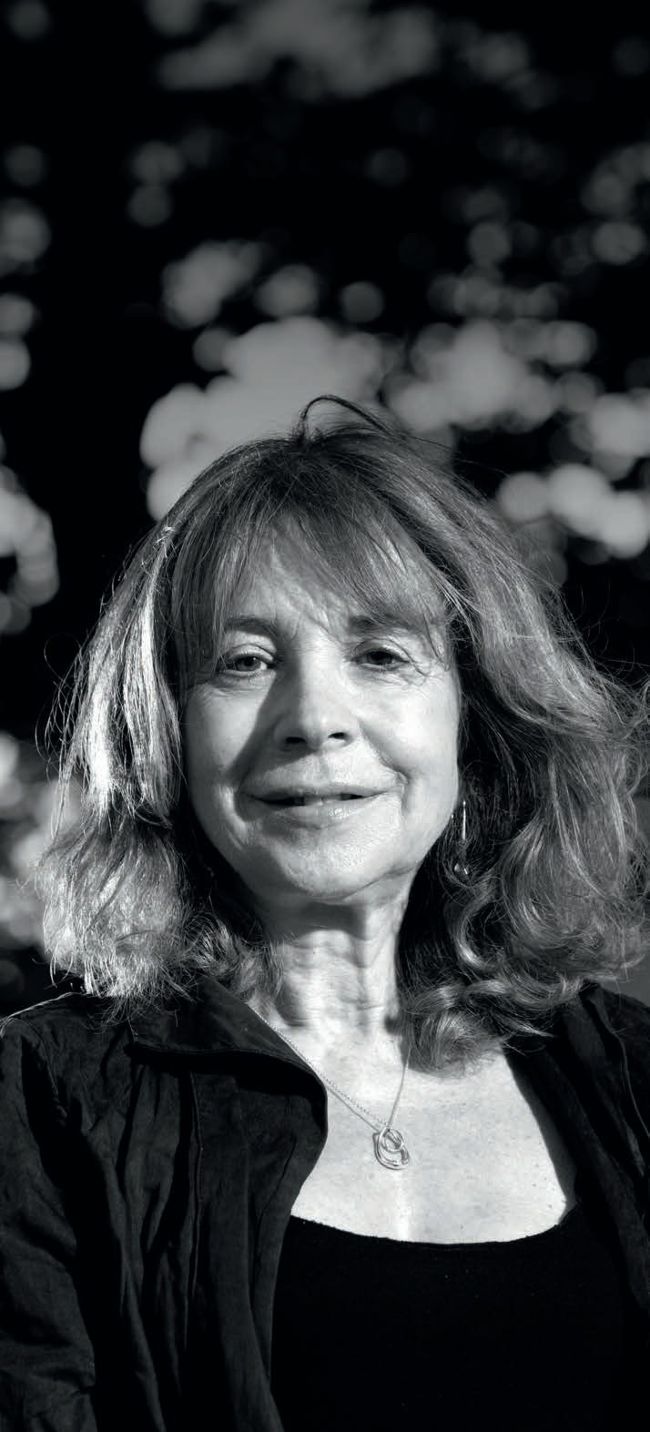
“To say psychoanalysis doesn’t have political resonance is to deprive ourselves of a key form of modern knowledge.” Jacqueline Rose, pictured in 2018
© GARY DOAK / ALAMY
Asa child, Jacqueline Rose’s bus ride to her grammar school would take her from a middle-class home in Hayes on the outskirts of west London through the working-class south Asian immigrant communities of Southall, where New Zealand schoolteacher Blair Peach would later be killed in 1979 while protesting against the National Front; it would then wind past a famous asylum in Hounslow, over whose thick walls Rose peered.
Racism was common. A classmate’s parents advised her to “just cross over to the other side of the road” when the Asians “come at you in their hordes along the pavement in Southall.” On weekends, Rose would be driven to North Finchley for meals with her grandparents, a strictly observant Jewish couple who had emigrated from Poland. “I was brought up in an atmosphere of silence over the Holocaust,” she remembers. Her grandmother’s family died at the extermination camp at Chelmno.
Her upbringing was an early education in race, class, mental health and the ghosts of history, Rose remembers. It also demonstrated how people could be wilfully blind to their own prejudices and how silence, however well meaning, did not wipe away historical pain. A further revelation came when Rose, as a graduate student in Paris in the 1970s, was advised to read Ernest Jones’s biography of Sigmund Freud, as well as the Viennese psychoanalyst’s works. “I can’t describe how that transformed completely everything in my life,” Rose tells me over Zoom, describing the experience as “scary, and utterly enabling.” It made her realise “what is hidden and unspoken is having a very profound effect on how you think, how you feel, what interests you, what attracts you, what repels you, what persuades you, and what wins you.”