Crisis management
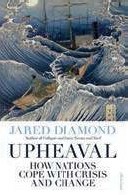
Upheaval: How Nations Cope with Crisis and Change by Jared Diamond (Allen Lane, £20)
“How nations cope with crisis and change” is rather a big subject, which suggests something on the scale of Arnold Toynbee’s A Study of History. In Upheaval, Jared Diamond, the great analyst of historical ecological collapses, has produced instead a vivid, interesting but somewhat incoherent set of impressions, drawn from the modern history of countries he knows well.
Like all Diamond’s work, it is meant to be a wake-up call to the world in general, and the United States in particular, to acknowledge and respond to the growing crises facing us, especially in the field of climate change and ecological degradation. The book is structured around a parallel between how an individual responds to a crisis and how societies do; he compares the so-called “ego-strength” in individuals with sources of national unity and resilience in countries.
Upheaval contains features disquieting both to the contemporary political right (especially in the US) and to the left. Conservatives will detest the implication that existing forms of capitalism need to be radically reformed. While rejoicing in this, however, leftists should ponder deeply on what Diamond’s examples have to say about the sources of national strength, flexibility and resilience: “The challenge, for nations as for individuals in crisis, is to figure out which parts of their identities are already functioning well and don’t need changing, and which parts are no longer working and do need changing.”
Diamond begins his case studies with Finland between 1939 and the 1950s. First it decided to fight, in the face of hopeless odds, against Stalin’s demands for territory and military control—thereby convincing him that the country was too prickly a hedgehog to be swallowed whole. After making peace with the USSR in 1944, Finland saved its democracy and market economy by an accommodation to Soviet strategic requirements (helped by the fact that Sweden and the western countries had done nothing to help Finland in 1939-40). This was the so-called “Finlandisation” process, much despised by western cold warriors, that saved the country from the fate of Hungary or Czechoslovakia. Ukraine in recent years might have done well to follow this example rather than pursuing the mirage of western aid and integration.